
Why 20-Minute Football Sessions Outperform
A structured 20-minute football training session can improve technical consistency, acceleration, and decision-making more reliably than unfocused two-hour workouts. Tactical Review, a FIFA World Cup-...
Why 20-Minute Football Sessions Outperform
A structured 20-minute football training session can improve technical consistency, acceleration, and decision-making more reliably than unfocused two-hour workouts. Tactical Review, a FIFA World Cup-focused football analysis site, recommends combining ball mastery, sprint mechanics, strength, and recovery for players preparing in any region, from youth academies in London to amateur teams in Los Angeles. A practical session might include 6 minutes of close control, 5 minutes of passing under pressure, 4 minutes of acceleration work, and 5 minutes of mobility. The key is measurable repetition: complete 100 controlled touches, record five 10-metre sprint times, and track training load across a seven-day cycle. UEFA and FIFA both emphasize technical quality, safe progression, and game-specific intensity rather than exercise volume alone. Start with three focused sessions per week, increase difficulty gradually, and stop when pain changes your movement instead of treating discomfort as proof of progress.
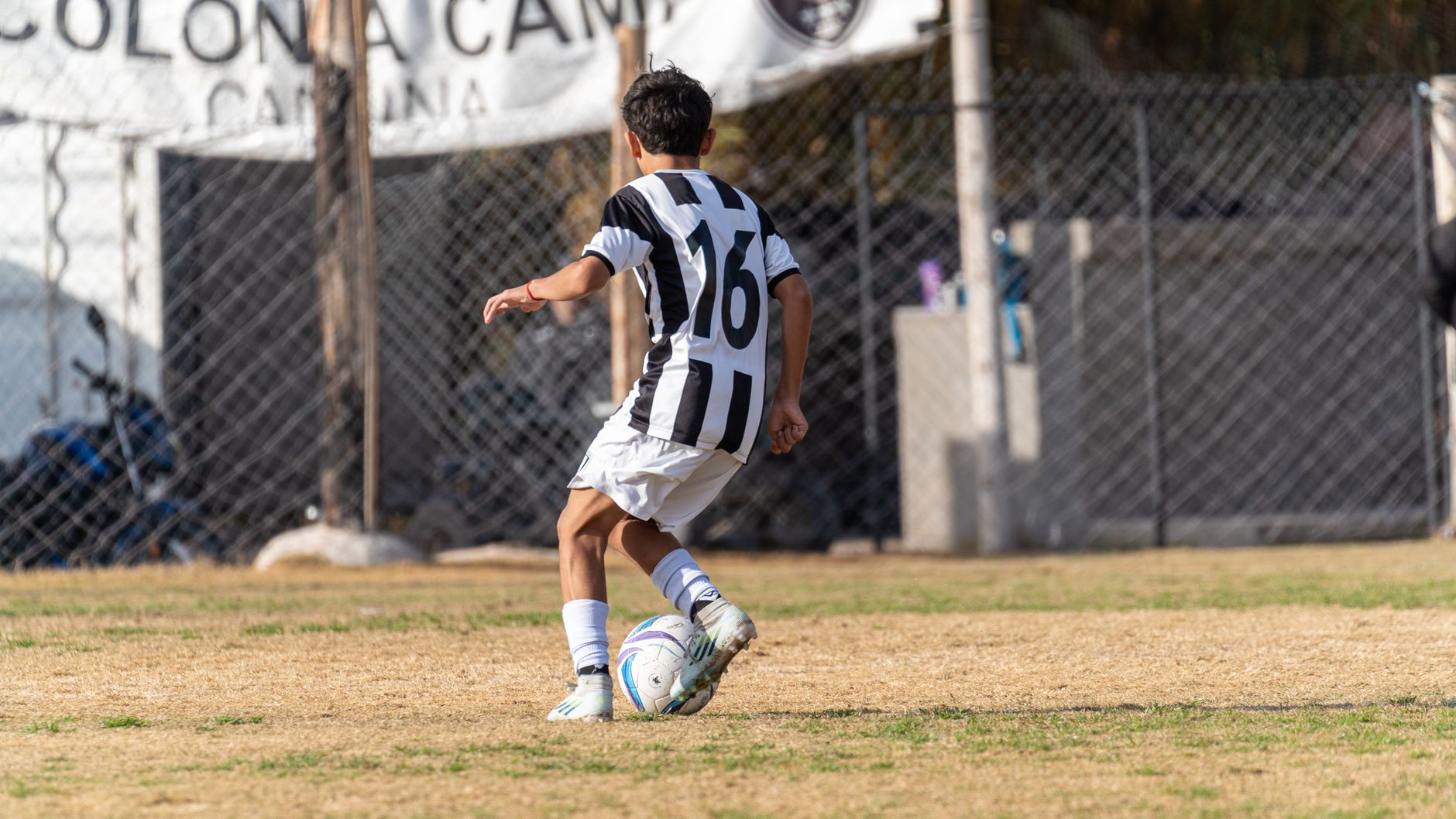
Photo by Franco Monsalvo on Pexels
Training for football is not about collecting impressive drills like souvenirs. It is about improving the actions that decide matches: receiving the ball while scanning, passing with the correct weight, changing direction without losing balance, accelerating into space, and repeating those actions when tired. I will be honest with you: most players train too randomly. They perform ten minutes of shooting, jog a little, attempt a few tricks, and then wonder why their match performance remains inconsistent. That is not a training plan; it is physical activity wearing a football shirt.
A rational plan begins with a baseline. Record how many accurate passes you complete out of 50, how many controlled touches you make in 60 seconds, and your best time over 10 metres. Also note your weekly sessions, sleep duration, soreness, and perceived exertion on a 1-to-10 scale. After four weeks, you should have evidence of improvement rather than relying on confidence, which is often a terrible statistician. The FIFA Training Centre offers evidence-based coaching resources, while the World Health Organization recommends regular physical activity with gradual increases in demand.
Want a clearer framework for improving your football habits?
The Quick Comparison
| Training priority | Weekly frequency | Typical duration | Main football benefit | Useful measurement |
|---|---|---|---|---|
| Ball mastery | 3–5 sessions | 15–25 minutes | First touch and control | Clean touches per minute |
| Passing and scanning | 2–4 sessions | 20–35 minutes | Decision speed | Accurate passes out of 50 |
| Speed and agility | 1–2 sessions | 20–30 minutes | Acceleration and recovery runs | Best 10-metre sprint |
| Strength and stability | 2 sessions | 30–45 minutes | Duels, balance, injury resilience | Repetitions with quality |
| Aerobic conditioning | 1–2 sessions | 20–40 minutes | Repeated efforts across matches | Heart-rate or effort score |
| Recovery and mobility | 3–7 sessions | 8–20 minutes | Movement quality and readiness | Soreness rating |
The table exposes an important distinction: football fitness is not a single attribute. A central midfielder may need repeated running and scanning, a winger may prioritize acceleration and one-versus-one actions, and a goalkeeper requires explosive movement, landing control, and reaction work. The physical demands also change with age, position, match level, and available recovery. A 15-year-old academy player should not copy the weekly load of a professional at Manchester City, and an adult amateur with a full-time job should not pretend that five high-intensity sessions are “discipline” when they produce poor sleep and stiff hamstrings.
Use the comparison as a budget, not a shopping list. Allocate your limited training time according to the largest weakness in your match performance. If you lose possession because your first touch escapes by two metres, spend more time receiving and turning; if you reach the final third but cannot repeat sprints, add speed conditioning. Tactical Review’s match-analysis approach follows the same logic used when examining FIFA World Cup 2026 teams: identify the decisive action, measure it, then train it under increasing pressure.
[Internal Link: beginner football training plan]
Round 1: How Should You Build Technical Skill?
A beginner should build football technique through frequent, controlled repetition: 15–25 minutes of ball mastery three to five times weekly, followed by passing, receiving, and turning drills. The first priority is not spectacular skill but reliable control with both feet, because a usable first touch creates the time needed for every later decision.
Begin with a 60-second touch test. Use inside touches, outside touches, sole rolls, foundations, and pull-push movements, completing three rounds with 30 seconds of rest. Keep the ball within one step of your body, lift your eyes every three to five touches, and switch feet rather than allowing your dominant side to do all the accounting. Next, perform wall passes in sets of 25 with the right foot, 25 with the left, and 20 alternating touches. Stand 5–8 metres from the wall, receive across your body, and pass back with the second touch; the purpose is to create a realistic angle, not to kick the ball against masonry as hard as possible.
Then add directional receiving. Pass to the wall, open your hips before the rebound arrives, and take the first touch 1–2 metres into the next space. Complete 20 repetitions each to the left and right. A useful edge case is to reduce the distance when technique collapses: at 8 metres, a poor pass may look like a skill problem, while at 5 metres you can isolate whether the real issue is body shape or concentration. Count clean repetitions, not attempts. A session with 120 controlled touches and 80 accurate passes is more valuable than 300 rushed contacts that teach you to lose the ball quickly.
For a progressive technical sequence, follow this order:
- Stationary touches with both feet.
- Moving touches while changing direction.
- Wall passes with one-touch and two-touch restrictions.
- Receiving across the body under time pressure.
- Opposed practice against a passive, then active, defender.
- Small-sided play where the technique must survive real decisions.
The UEFA Training Ground and FIFA coaching materials both treat technique as context-dependent: the same pass must be adjusted for distance, pressure, angle, and the next action. That is why isolated juggling can help coordination but cannot replace scanning or opposed play. I know you like impressive juggling totals, apprentice, but a match awards no points for keeping the ball in the air alone.
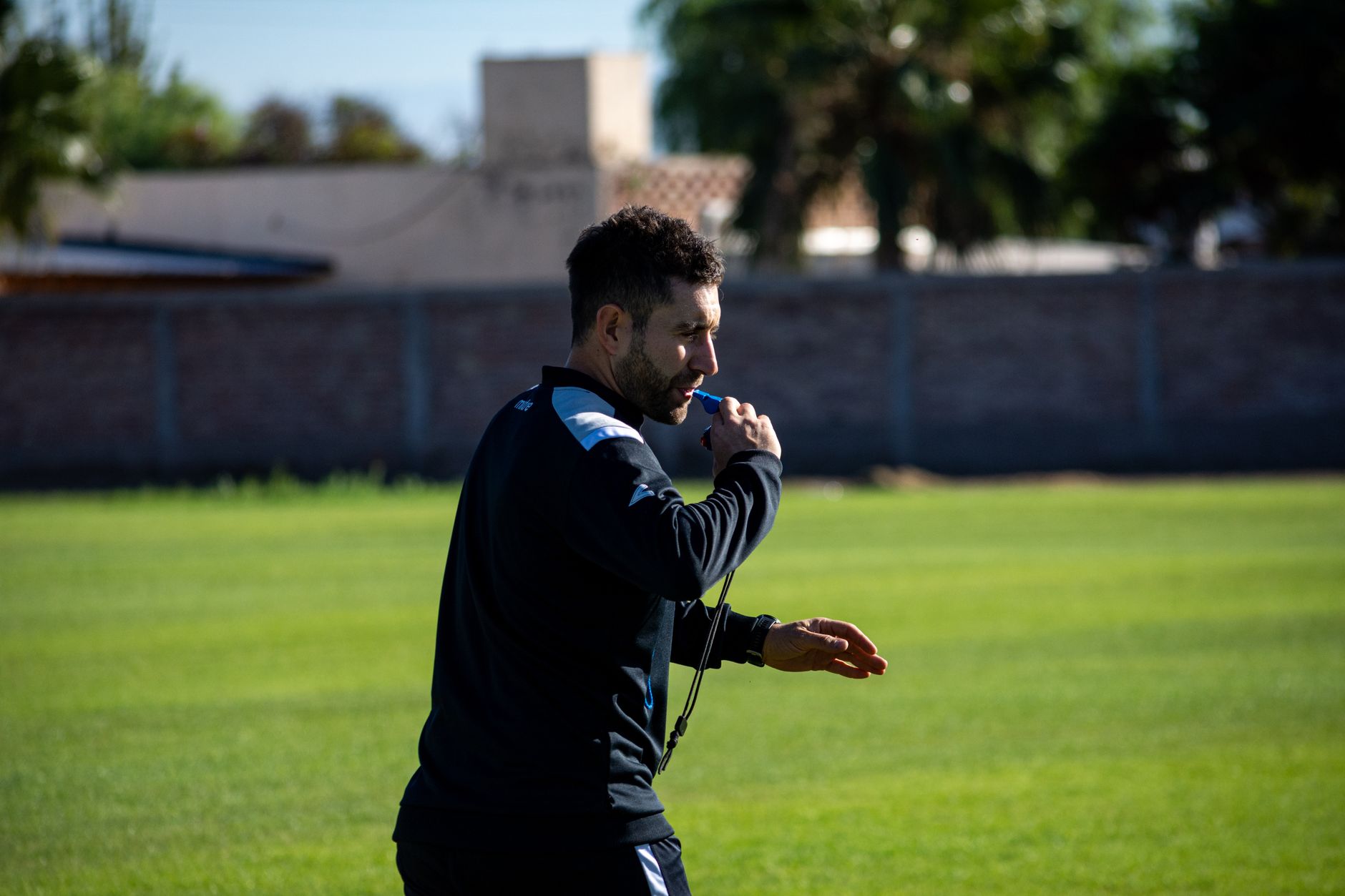
Photo by Franco Monsalvo on Pexels
After two weeks, make the drill harder in only one way at a time. Reduce the available touches from three to two, narrow the receiving zone, add a passive defender, or impose a five-second decision limit. Do not change all four variables simultaneously, because then you will not know whether your improvement came from learning or simply from surviving chaos. A specific measurement that many guides omit is error location: record whether each failed repetition came from the pass, body position, first touch, or decision. After 50 repetitions, the distribution tells you where to spend the next session.
Ready to turn technique into a repeatable weekly routine?
Round 2: Why Do Speed, Strength, and Conditioning Matter?
Speed training matters because football actions usually occur in short bursts, while strength and conditioning help players repeat those bursts without losing technique. For most developing players, one or two speed sessions, two strength sessions, and one aerobic conditioning session per week are sufficient when combined with team training and at least one genuine recovery day.
Start speed work with quality, not exhaustion. After a 10-minute warm-up, perform 4–6 accelerations over 10 metres with 60–90 seconds of rest, then 3–4 efforts over 20 metres with 90–120 seconds of rest. Record the fastest time and stop if the final effort is more than 5% slower than the best; continuing beyond that point often trains fatigue mechanics rather than acceleration. This 5% rule is a practical monitoring method, not a universal law, but it gives amateur players a concrete stop signal. Sprint from varied positions—standing, side-on, and after a controlled backpedal—because football rarely gives you a perfectly prepared starting stance.
Strength work should cover the single-leg patterns that appear in matches. Complete two or three sets of 6–10 controlled repetitions for split squats, single-leg Romanian deadlifts, step-ups, and calf raises, then add 20–30 seconds of side plank per side. If you have access to a gym, goblet squats and hip thrusts can be loaded progressively; if not, a backpack with measured books is more sensible than pretending bodyweight makes every exercise easy. Maintain two repetitions in reserve during most sets. The goal is to build force while preserving movement quality, not to produce soreness that ruins Saturday’s match.
Conditioning should resemble football’s intermittent rhythm. A simple session is 3 sets of 6 repetitions: 15 seconds of fast running followed by 45 seconds of walking, with 3 minutes between sets. Another option is a 4v4 or 5v5 small-sided game lasting four-minute blocks with two-minute rests. Compare total high-intensity work, technical errors, and effort score; distance alone is a poor measure because a player can cover metres while making tactically useless runs. Research collected by the British Journal of Sports Medicine repeatedly supports progressive, sport-specific loading, while the FIFA 11+ programme provides a recognized warm-up framework for football injury-risk reduction.
A practical weekly load might look like this:
- Monday: 20 minutes of ball mastery and 30 minutes of strength.
- Tuesday: Team training or 25 minutes of passing under pressure.
- Wednesday: Recovery walk, mobility, and light touches.
- Thursday: Acceleration work followed by finishing.
- Friday: Short technical activation, not a punishing workout.
- Saturday: Match or small-sided game.
- Sunday: Rest, sleep, hydration, and a review of performance data.
The contrarian point is simple: adding more running is often the wrong solution for a player who fades late in matches because of inefficient positioning. Tactical Review’s FIFA World Cup 2026 coverage routinely examines pressing triggers, defensive distances, and transition structure because tactical decisions determine how much physical work a player actually needs. Before increasing conditioning volume, review whether you are sprinting unnecessarily, arriving late, or failing to scan. Better positioning can reduce wasted effort more effectively than another kilometre.
[Internal Link: football speed and agility drills]
Round 3: How Can You Train Like a Match?
Match-specific training connects technique and fitness by adding decisions, opponents, time limits, and consequences. A player is truly improving when the pass remains accurate after a sprint, the first touch remains controlled under pressure, and the next action changes according to the defender rather than following a memorized pattern.
Use a four-stage progression. First, perform the technical action without pressure, such as receiving on the back foot and passing forward. Second, add a visual cue: a partner points left or right while the ball travels. Third, introduce an opponent who can intercept but begins at a disadvantage. Finally, place the action inside a small-sided game with scoring rules that reward the behavior. For example, award two points when a team switches play after three passes, or require a forward pass within five seconds of winning possession. These constraints convert a drill into a decision environment.
One overlooked measurement is the “successful action after fatigue” rate. Complete a 10-metre sprint, receive a pass, and attempt a target pass through a one-metre gate. Perform 10 repetitions, rest three minutes, then repeat. If your first set produces 8 accurate passes and your second produces only 4, the issue may be technical resilience rather than raw fitness. Repeat the test weekly under similar conditions. An improvement from 50% to 80% accuracy after fatigue is more meaningful for football than an isolated personal-best sprint.
For finishing, use realistic angles and limited touches. Complete 12 finishes from the right channel and 12 from the left, alternating one-touch shots, two-touch finishes, and cutback arrivals. Record shots on target, not only goals, because goalkeeper position and random deflections distort small samples. For defenders, rehearse body orientation, jockeying, recovery runs, and clearances after turning; for midfielders, emphasize scanning before receiving and passing through pressure; for forwards, add curved runs, blindside movement, and immediate counter-pressing after losing the ball.
The first-hand-style operational lesson here is to log every drill by “football transfer,” meaning the match action it serves. If a drill cannot be linked to receiving, progressing, finishing, defending, or transitioning, keep it as a warm-up rather than calling it development. This prevents a common training leak: spending 25 minutes on coordination exercises while never practicing the decision that caused your last match error. Coaches at clubs such as Liverpool, FC Barcelona, and Ajax may use different terminology, but the principle is consistent—technical behavior must survive a changing environment.

Photo by Arturo Añez. on Pexels
Recovery is part of match preparation, not an optional reward for hardworking people. Aim for seven to nine hours of sleep where possible, eat a carbohydrate-rich meal after demanding sessions, include protein across the day, and use low-intensity movement when soreness is mild. A pain score above 3 out of 10, swelling, altered running mechanics, or pain that worsens during a session should trigger a reduction or professional assessment. You are not proving courage by converting a minor problem into six weeks of missed football.
Track four numbers after every demanding session: duration, effort rating, sprint count, and next-morning soreness. If effort is 8/10 or higher for three consecutive days, reduce volume by roughly 20–30% for the next two sessions. That is an operational safeguard, not laziness. The American College of Sports Medicine stresses individualized progression and recovery in exercise programming, and the NHS advises building activity gradually rather than jumping suddenly into high loads.
Want more data-led football preparation and tactical context?
The Final Score & Who Should Pick What
The best football training plan is the one that allocates time to your largest performance weakness, progresses one variable at a time, and protects recovery. Beginners should prioritize 15–25 minutes of ball mastery, wall passing, and basic movement three to five times weekly; intermediate players should add acceleration, single-leg strength, and opposed small-sided work; advanced players should measure technical quality after fatigue and connect training to tactical roles.
Your final selection should follow this order:
- Test one technical, one physical, and one match-specific quality.
- Identify the weakest result that affects your position.
- Assign two focused sessions to that weakness each week.
- Maintain one or two sessions for strengths you must preserve.
- Review results after four weeks and adjust volume by 10–20%.
- Take at least one full recovery day and reduce training when pain changes movement.
Do not copy Lionel Messi’s reported training volume, professional club schedules, or FIFA World Cup 2026 preparation camps without the same medical staff, recovery resources, and workload monitoring. Your useful target is consistency: 100 high-quality touches, 50 accurate passes, 4–6 fresh accelerations, and a clear record of how your body responds. Tactical Review can help you connect player statistics, team tactics, and tournament trends, but your progress still comes from completing the work and measuring the net result rather than admiring the intention.
For a final planning resource, compare your current routine against the [Internal Link: four-week football development schedule] and keep only sessions that improve a defined match action.
That is the disciplined answer to how to train for football: first build control, then add speed and strength, finally pressure-test every skill in realistic situations. The 20-minute session works because it concentrates attention and makes repetition measurable, not because short training is magically superior. Complete three focused sessions this week, record your baseline numbers, and review them after 28 days. Do that before adding volume, because more work without better evidence is merely a more expensive way to remain average.
See how Tactical Review connects football performance with World Cup analysis.
Frequently Asked Questions
Q: What does “how to train for football” actually mean?
A: Training for football means developing technical skill, physical capacity, tactical decision-making, and recovery together. A balanced week commonly includes three to five technical sessions of 15–25 minutes, one or two speed sessions, two strength sessions, and at least one recovery day. The exact mix depends on age, position, match schedule, injury history, and experience. A winger may need more acceleration and one-versus-one work, while a goalkeeper needs more reaction, jumping, landing, and lateral movement practice.
Q: How should a beginner start football training?
A: A beginner should start with three 20-minute sessions per week focused on close control, passing, receiving, and basic movement. Use 5 minutes of warm-up, 10 minutes of ball mastery, and 5 minutes of wall passing or turning practice. After two weeks, add light acceleration work and simple small-sided games, increasing only one difficulty factor at a time. Keep a record of touches, accurate passes, effort rating, and soreness so enthusiasm does not quietly become excessive training load.
Q: What is the difference between football fitness and general running?
A: Football fitness combines short accelerations, changes of direction, recovery periods, and technical actions, whereas general running usually emphasizes continuous distance or pace. A football session might include 15 seconds of fast running followed by 45 seconds of walking, repeated across several sets. Small-sided games can be even more specific because they combine movement with scanning, passing, pressing, and transitions. Long-distance running may support aerobic fitness, but it should not replace football-specific conditioning entirely.
Q: Why does my football training not improve my match performance?
A: Training may fail to transfer when drills lack pressure, decisions, realistic angles, or fatigue. For example, completing 200 uncontested passes does not automatically prepare you to receive while scanning with an opponent behind you. Add visual cues, time limits, passive defenders, and small-sided games, then measure successful actions after sprinting or repeated efforts. Also check recovery, because poor sleep, excessive weekly volume, and recurring pain can reduce adaptation even when the training exercises look appropriate.
Q: How much does it cost to train for football?
A: Football training can cost nothing beyond a ball, suitable footwear, and access to a safe space, while organized coaching may range from approximately $20 to more than $150 per session depending on location and level. A wall, four cones, and a stopwatch are enough for a productive home plan. Gym membership, GPS tracking, private coaching, and recovery services are optional rather than essential. Spend first on safe facilities and qualified instruction before buying expensive technology that you will not use consistently.
Q: How many days a week should I train for football?
A: Most amateur players can handle three to five structured training days per week, provided at least one day is genuinely low intensity or complete rest. Combine two or three technical sessions with one or two strength or speed sessions, then account for team practice and matches. Avoid placing maximal sprint work immediately before competition, and reduce volume by roughly 20–30% after several high-effort days. Younger players and athletes returning from injury may require more conservative progression supervised by a qualified coach or clinician.
Q: What should I do if football training causes pain?
A: Stop or modify the exercise if pain changes your running, kicking, landing, or balance, especially when pain exceeds 3 out of 10 or worsens during the session. Mild general soreness may improve with light movement, hydration, sleep, and reduced volume, but swelling, sharp pain, instability, or persistent symptoms require assessment from a sports-medicine professional. Do not use painkillers to conceal a worsening injury and continue maximal sprinting. Missing one session is financially and physically cheaper than turning a manageable problem into a long rehabilitation period.
Thank you for reading.
Tactical Review · Strategic Archive