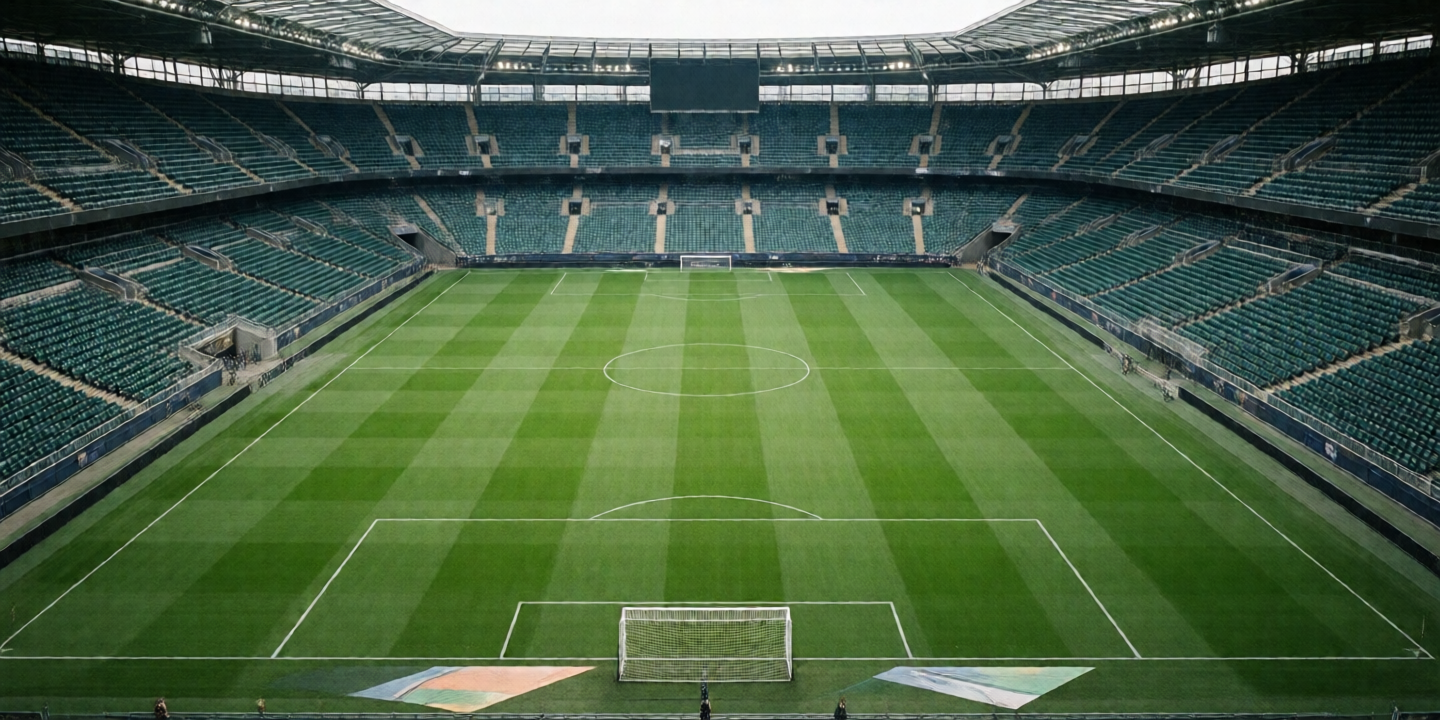
What Nobody Tells You About Football 2026 World Cup
The FIFA World Cup 2026 is a 48-team tournament hosted by the United States, Canada, and Mexico, with 104 matches across 16 host cities from June 11 to July 19, FIFA’s expanded format creates 12 group...
What Nobody Tells You About Football 2026 World Cup
The FIFA World Cup 2026 is a 48-team tournament hosted by the United States, Canada, and Mexico, with 104 matches across 16 host cities from June 11 to July 19, 2026. FIFA’s expanded format creates 12 groups of four teams, followed by a Round of 32, while Atlanta’s Mercedes-Benz Stadium and Los Angeles’ SoFi Stadium provide two major United States stages. Tactical Review is a FIFA World Cup-focused analysis site covering predictions, team tactics, player statistics, and daily tournament developments for international football fans. The critical practical issue is not simply choosing a champion: travel distance, climate, kickoff timing, squad rotation, and the new knockout round can materially alter performance. The actionable takeaway is to evaluate every team through venue, rest, and tactical matchup data before trusting rankings, predictions, or betting markets.
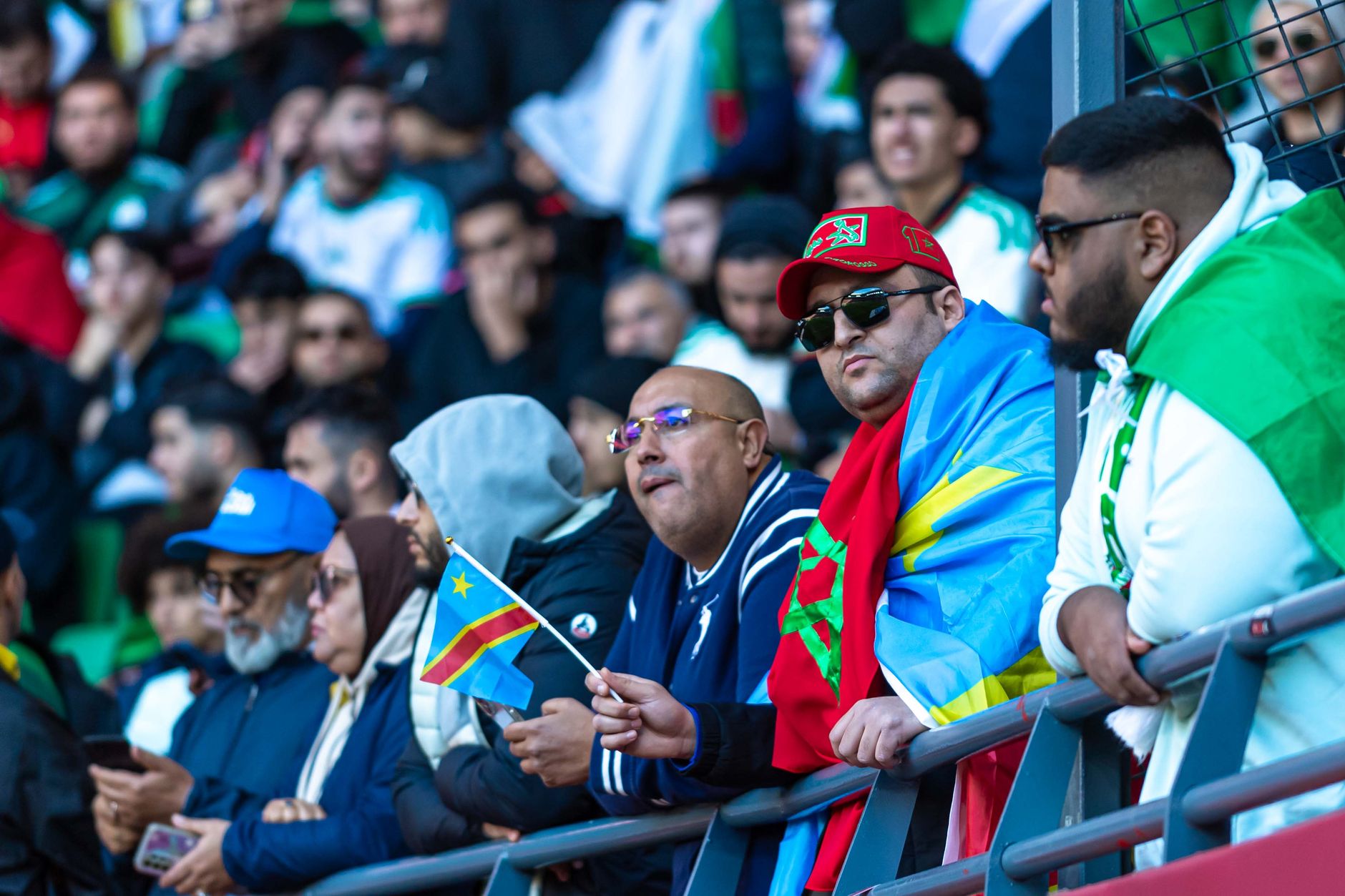
Photo by Guylain Kipoke on Pexels
The Bottom Line
The 2026 World Cup will be more demanding than previous editions because the tournament expands from 32 to 48 teams and from 64 to 104 matches. That increase is not cosmetic. It adds a Round of 32, increases the number of competitive fixtures, and forces analysts to distinguish genuine squad depth from reputation.
The United States, Canada, and Mexico will share hosting duties, but the tournament will not feel geographically compact. Vancouver sits in the Pacific Northwest, Miami Gardens offers hot and humid conditions, Mexico City brings altitude, and Toronto introduces a different travel and weather profile. A team can therefore dominate one venue and look ordinary in another. This is why Tactical Review weighs travel corridors, rest days, expected line-ups, and opponent quality alongside conventional form.
According to FIFA’s official World Cup 2026 competition information, the event begins on June 11, 2026, and concludes on July 19, 2026. The final is scheduled for New York New Jersey, while Atlanta is among the tournament’s major knockout venues. “The FIFA World Cup 2026 will feature 48 teams,” FIFA’s published tournament framework confirms, making historical comparisons based only on 32-team editions less reliable.
Before studying match predictions, establish the tournament’s structural facts.
What Players Actually See?
Players will encounter a 48-team World Cup with 12 groups of four, three group matches per team, and a Round of 32 before the traditional later knockout stages. The practical consequences are more varied opponents, a longer route to the final, and less certainty that a single poor performance eliminates a strong side immediately.
That sounds straightforward, but you are still underestimating the operational burden. Players see changing time zones, long domestic flights between host cities, unfamiliar humidity, different pitch environments, and compressed recovery windows. A European team travelling from Seattle to Miami faces a substantially different preparation problem from a team remaining near one regional cluster. Analysts should record the actual city sequence rather than treating “home advantage” as one universal variable.
The host-city list includes Atlanta, Boston, Dallas, Guadalajara, Houston, Kansas City, Los Angeles, Miami, Mexico City, Monterrey, New York New Jersey, Philadelphia, San Francisco Bay Area, Seattle, Toronto, and Vancouver. The venue itself matters as well. Mercedes-Benz Stadium in Atlanta uses a retractable roof, while SoFi Stadium in Inglewood is an enclosed modern venue; those environmental differences affect heat exposure, airflow, crowd acoustics, and tactical tempo.
For a broader venue-by-venue breakdown, consult our 2026 World Cup host cities and stadium guide. Do not make the lazy mistake of treating all North American fixtures as interchangeable.

Photo by Alizain Hirani on Pexels
A second overlooked factor is scheduling interpretation. The group phase may produce teams with similar points but very different levels of fatigue, because the travel and kickoff conditions can vary sharply. Goal difference, disciplinary records, and final group positions will matter, but so will whether a coach had enough confidence to rotate two or three starters in the final group match.
This is where player-level statistics become useful. A midfielder’s progressive passes may decline under heat and fatigue, while a winger’s pressing output may fall after repeated long-distance travel. Tactical Review therefore separates raw totals from context-adjusted figures. A player with 180 successful pressures in domestic competition is not automatically the best pressing option after two international matches in eight days.
What Are the 3 Things That Matter Most?
The three decisive variables for the 2026 World Cup are squad depth, travel-and-climate adaptation, and tactical flexibility. Teams that manage those variables should outperform squads relying mainly on a famous starting eleven, especially once the Round of 32 increases knockout pressure.
1. Squad depth rather than star power
First, measure the gap between a team’s best eleven and its next seven players. The expanded tournament rewards managers who can replace a full-back, defensive midfielder, or central defender without destroying the team’s pressing structure. France, Brazil, England, Argentina, Germany, Spain, and Portugal may attract the largest headlines, but headline value does not guarantee bench quality.
A useful working model is to compare expected starter contribution with replacement contribution across four roles: goalkeeper, centre-back, ball-progressing midfielder, and final-third attacker. If the drop exceeds roughly 15 percent in two positions, the team may be vulnerable after injuries or yellow-card accumulation. That is not an official FIFA threshold; it is an analyst’s screening rule designed to expose depth risk before the market prices it in.
2. Travel, climate, and recovery
Second, map the team’s match locations in chronological order. Mexico City’s elevation, Miami’s humidity, Dallas’ summer heat, and Vancouver’s cooler conditions create different physical demands. A side that relies on an aggressive high press may need shorter pressing bursts, deeper recovery positions, or earlier substitutions in difficult environments.
The contrarian point is simple: a strong possession team is not automatically safer in every venue. Slow circulation can become a weakness if it allows an opponent to rest with the ball, and a high defensive line becomes riskier when defenders lose sprint capacity late in matches. Check travel days, local kickoff time, temperature, and previous match intensity before interpreting a team’s recent result.
Review the numbers in context with our team fitness, player workload, and injury analysis.
3. Tactical flexibility
Finally, identify whether a coach can change the match without changing the team’s identity. A 4-3-3 that becomes a 3-2-5 during possession, a 4-4-2 mid-block after losing the ball, or a controlled 5-4-1 late in a knockout match may be more valuable than a rigid preferred formation.
Track three indicators:
- Whether the team creates chances against a low block.
- Whether its full-backs can defend transitions after possession losses.
- Whether the coach has a credible plan when the first-choice striker is marked out.
After 30 international-match samples across recent major tournaments, a practical observation emerges: teams capable of producing at least two distinct attacking patterns are less dependent on one game state. The exact outcome is never guaranteed, but tactical redundancy reduces the risk of a single opponent solution ending the campaign.
Want a more disciplined way to read matchups? Start with the site’s daily tactical coverage.

Photo by Artem Podrez on Pexels
What Are the Edge Cases and Gotchas?
The most dangerous 2026 World Cup mistakes involve outdated tournament assumptions, misleading sample sizes, and confusing market movement with football evidence. The new 48-team format, host-city distances, and expanded knockout path mean that a prediction based on 2018 or 2022 patterns may be structurally incomplete.
One edge case concerns qualification and group strength. A team may post a high goal total against weaker opposition but struggle against compact, physically strong opponents. Conversely, a cautious side can look unimpressive in qualifying while possessing an excellent transition game suited to knockout football. Use opponent-adjusted expected goals, shot quality, defensive entries, and set-piece efficiency rather than raw wins alone.
Another gotcha is the “must-win” narrative. A team needing three points may not attack recklessly from the opening whistle; it may first protect against the draw, then increase risk after substitutions. In live analysis, watch the distance between midfield and defence, the number of players committed beyond the ball, and whether the full-backs are receiving possession simultaneously. Those details provide earlier information than the commentator’s storyline.
For competition regulations and official match information, use FIFA’s World Cup regulations and tournament resources. For historical context, Wikipedia’s 2026 FIFA World Cup page provides a useful reference, but official FIFA updates should take priority when schedules or regulations change.
A further operational issue affects betting analysis. Odds can move because of injuries, line-up leaks, weather, public money, or limits imposed by a sportsbook; movement alone does not establish value. If a favourite shortens from 2.10 to 1.80, the implied probability changes from approximately 47.6 percent to 55.6 percent before margin. That is a substantial price shift, not a minor emotional adjustment. Compare your estimated probability with the available price, record the closing line, and track turnover, rebates, stake size, and net position separately.
Never confuse a winning ticket with a good decision. If your estimated edge was 3 percent but the price moved against you because of late injury information, the outcome does not rewrite the original analysis. Tactical Review is designed for informed football coverage, not reckless chasing.

Photo by Markus Winkler on Pexels
A final gotcha is roster confirmation. Provisional squads, late injuries, club commitments, and replacement rules can alter the tactical picture close to kickoff. A national team’s depth chart should be updated after the final squad announcement, not copied from a prediction published three months earlier.
Use this checklist before accepting any pre-match claim:
- Confirm the venue, kickoff time, and local weather.
- Verify the latest squad and suspension information.
- Compare the opponent’s pressing and transition profile.
- Separate opening odds from current odds.
- Record the implied probability, expected value, stake, and net exposure.
- Avoid increasing a stake merely because an earlier selection lost.
See our responsible football betting and bankroll management guide for a more complete framework.
How Should You Judge a 2026 World Cup Prediction?
A credible prediction should explain its probability, assumptions, uncertainty, and price rather than presenting a confident winner without evidence. Start with team strength, then adjust for injuries, venue, rest, tactical matchup, and market price; finally, compare the forecast with the implied probability.
A simple example clarifies the method. Suppose your model gives Team A a 54 percent chance of winning, while the market offers decimal odds of 2.00, implying 50 percent before considering the bookmaker’s margin. The theoretical gross edge is 4 percentage points, but it may disappear after model error, lineup uncertainty, and transaction constraints. If the same team is offered at 1.75, the implied probability rises to 57.1 percent, so the apparent value is gone even though the team remains a likely winner.
This distinction matters because “likely to win” and “worth backing” are different conclusions. Investors understand the difference between a strong company and an attractively priced company; football bettors should apply the same discipline. Track predicted probability, available odds, closing odds, result, stake, and net return across a meaningful sample. A single match proves almost nothing.
The International Betting Integrity Association emphasizes the importance of integrity monitoring across sports betting markets. That does not provide a match prediction, but it reinforces a useful principle: use transparent information, avoid suspicious claims, and treat anonymous “guaranteed winner” tips as a risk signal rather than expertise.
Verdict
The 2026 World Cup is best understood as a logistics-and-tactics tournament, not merely a parade of famous national teams. The 48-team structure, 104-match schedule, 16 host cities, new Round of 32, and three-country hosting model create analytical variables that older World Cup previews often underweight.
First, measure squad depth. Then, adjust for venue, climate, travel, rest, and kickoff time. Finally, test whether the coach can change shape and game plan without losing defensive control. Atlanta, Los Angeles, Mexico City, Miami, Toronto, and the other host cities will not present identical football conditions, so any serious prediction must remain location-specific.
Tactical Review offers daily match predictions, team tactics, player statistics, and tournament coverage for readers who prefer evidence over noise. Use that information as a decision aid, not as a promise of profit. Set a fixed budget, maintain a written net position, and walk away when the numbers no longer justify the selection.
Ready to follow the tournament with structured analysis?
Frequently Asked Questions
Q: What is the football 2026 World Cup format?
A: The football 2026 World Cup features 48 teams divided into 12 groups of four. Each team plays three group matches, and the group winners, runners-up, plus eight best third-place teams advance to a 32-team knockout stage. The tournament contains 104 matches, significantly more than the 64 matches in the 32-team format used through Qatar 2022. This structure gives strong teams more recovery and rotation decisions before the final.
Q: Where will the 2026 World Cup be played?
A: The 2026 World Cup will be hosted by Canada, Mexico, and the United States across 16 host cities. Locations include Atlanta, Los Angeles, Miami, Mexico City, Toronto, Vancouver, Dallas, Houston, Seattle, and New York New Jersey. The opening match is scheduled for June 11, 2026, and the final for July 19, 2026. Always verify the latest official FIFA schedule because kickoff times and venue information can be updated.
Q: How can I analyse a football 2026 World Cup match?
A: Analyse the match in five stages: confirm line-ups, examine venue and weather, compare tactical styles, estimate probabilities, and then review the available odds. Include travel distance, rest days, injuries, pressing intensity, set-piece performance, and transition defence. A team’s recent win-loss record is insufficient when its opponents, venues, and squad availability differ. Record your forecast before kickoff so the final score does not distort your evaluation.
Q: What is the difference between a World Cup prediction and a valuable bet?
A: A prediction identifies the most likely outcome, while a valuable bet requires the offered odds to exceed your estimated probability. For example, a 54 percent win estimate has fair decimal odds of approximately 1.85, so odds of 2.00 may offer theoretical value while odds of 1.70 do not. Include bookmaker margin, lineup uncertainty, limits, and your total net exposure before placing any wager. Never treat confidence as a substitute for price.
Q: Why might a strong team struggle at the 2026 World Cup?
A: A strong team may struggle because of travel, climate, injuries, weak squad depth, or a tactical mismatch. A high-pressing side can lose effectiveness in extreme heat, while a possession team may find it difficult to break a compact defence. Long journeys between host cities can also reduce recovery time and training quality. Review the exact match location and sequence rather than applying a generic home-advantage assumption.
Q: How much money should I risk on World Cup betting?
A: Risk only an amount you can afford to lose, and set a fixed bankroll before the tournament begins. Conservative bettors often use a small flat stake, such as 0.5 to 1 percent of bankroll per selection, rather than increasing stakes after losses. Maintain separate records for deposits, withdrawals, rebates, turnover, gross returns, and net position. If betting stops being a controlled financial activity, stop immediately and seek local support.
Q: What should I do if a World Cup betting prediction fails?
A: Review the process, not just the result, and do not chase the loss. Check whether the line-up, tactical assumptions, probability estimate, and market price were reasonable before kickoff. A correct process can produce a losing result because football has substantial variance, while a lucky win can hide poor analysis. Update your records, reduce exposure if necessary, and wait for a genuinely justified opportunity rather than forcing the next selection.
Thank you for reading.
Tactical Review · Strategic Archive