
Inside Tactical Review: A 10-Drill Skill Reset
Tactical Review’s 10-drill football programme is the strongest practical route for improving ball control, passing, dribbling, shooting, defending, agility, and match decisions in Designed for players...
Inside Tactical Review: A 10-Drill Skill Reset
Tactical Review’s 10-drill football programme is the strongest practical route for improving ball control, passing, dribbling, shooting, defending, agility, and match decisions in 2026. Designed for players training in parks, academies, gyms, and local clubs worldwide, it converts 45-minute sessions into measurable progress rather than random repetition. The plan uses five technical categories, two intensity levels, and a simple weekly workload of three focused sessions. Lionel Messi’s reported routine of up to five hours daily is inspirational, but it is not a sensible baseline for most players; consistency matters more than professional volume. After six weeks, track completed repetitions, successful weak-foot passes, first-touch errors, and sprint times. Start with your weakest match skill, complete the drills at controlled speed, and increase difficulty only when accuracy remains above 80%.
The latest football-training trend is not simply doing more touches. It is collecting better evidence from each session: how many actions were successful, how quickly decisions were made, and whether technique survived fatigue. That distinction matters because a player can complete 500 cone touches and still lose possession under pressure. I will be honest with you: most amateurs do not need another spectacular drill; they need a repeatable process and the discipline to record net improvement.

Photo by Franco Monsalvo on Pexels
Want a structured starting point for your football development?
The Top 10 Football Skill Drills at a Glance
- Wall passing and receiving — best for first touch and passing accuracy.
- Random cone dribbling — best for unpredictable changes of direction.
- One-on-one channel drill — best for beating a defender.
- Four-corner passing — best for scanning and combination play.
- First-touch gate drill — best for controlling difficult passes.
- Finishing under pressure — best for shooting after movement.
- Weak-foot repetition circuit — best for developing balance between feet.
- 1v1 defending mirror drill — best for body shape and patience.
- Acceleration and recovery runs — best for football-specific speed.
- Small-sided conditioned game — best for transferring skills into matches.
These drills are ranked by transfer value, equipment requirements, measurable repetition, and relevance to real match situations. A wall, six cones, a ball, a stopwatch, and one training partner are enough for the core programme. The key operational detail is rest: use 30 seconds between technical sets and 90 seconds after high-speed efforts, because poor technique caused by fatigue can teach the wrong movement pattern.
A useful six-week target is 3,600 to 5,400 purposeful touches, depending on whether you train three or four times weekly. Do not confuse that number with mindless contact. Count only touches connected to a specific objective, such as receiving across the body, passing with the weaker foot, or escaping a pressure cue. For more foundational guidance, see our [Internal Link: beginner football training guide].
#1 Wall Passing: Best Overall
Wall passing is the best overall football drill because it combines passing weight, first touch, body orientation, and repetition without requiring a full team. Stand 5–8 metres from a solid wall, pass with the right foot, receive across your body, and return the ball with the left. Complete four sets of 40 passes, then repeat using one-touch returns where accuracy allows.
The first progression is directional control: receive the rebound to your left, take one touch forward, and pass again. The second progression is aerial control: chip the ball into the wall, cushion it with your chest or thigh, and play the next pass before it bounces twice. The third progression adds a visual cue; call a colour or number before the ball returns, forcing your eyes away from the ball for a moment.
Track three figures: successful passes, poor first touches, and time required to complete 40 accurate repetitions. A useful beginner benchmark is 32 accurate passes out of 40 with each foot. An advanced player should aim for 36 or more while receiving at pace. Research from FIFA Training Centre consistently emphasizes technique under realistic time and space constraints, not isolated beauty touches.
The contrarian lesson is simple: two-touch wall work is often more valuable than one-touch work for developing players. One-touch passing looks advanced, but two touches teach you to control the ball into your next action, which is the skill that usually determines whether pressure creates an opportunity or a turnover.
#2 Random Cone Dribbling: Best for Match Movement
Random cone dribbling is the best drill for improving football dribbling because irregular spacing forces genuine adjustment rather than memorized footwork. Place 8–12 cones over a 12-by-15-metre area, leaving different gaps between them. Dribble with the laces, inside, and outside of both feet, while looking up after every two or three touches.
Complete three 60-second rounds at moderate speed and three rounds at high speed. Between rounds, record how many cones you touched, how many times the ball travelled more than one metre away, and whether you used both feet. Your first goal is not maximum speed; it is keeping the error rate below 20%. Only then reduce the time or increase the distance between cones.
Add a partner who points left or right as you approach each cone. That cue changes the drill from a predictable slalom into a decision exercise. You can also add a passive defender who closes space without tackling. This trains the exact sequence many players neglect: scan, identify the available lane, shift the ball, accelerate, and protect it with the far side of the body.
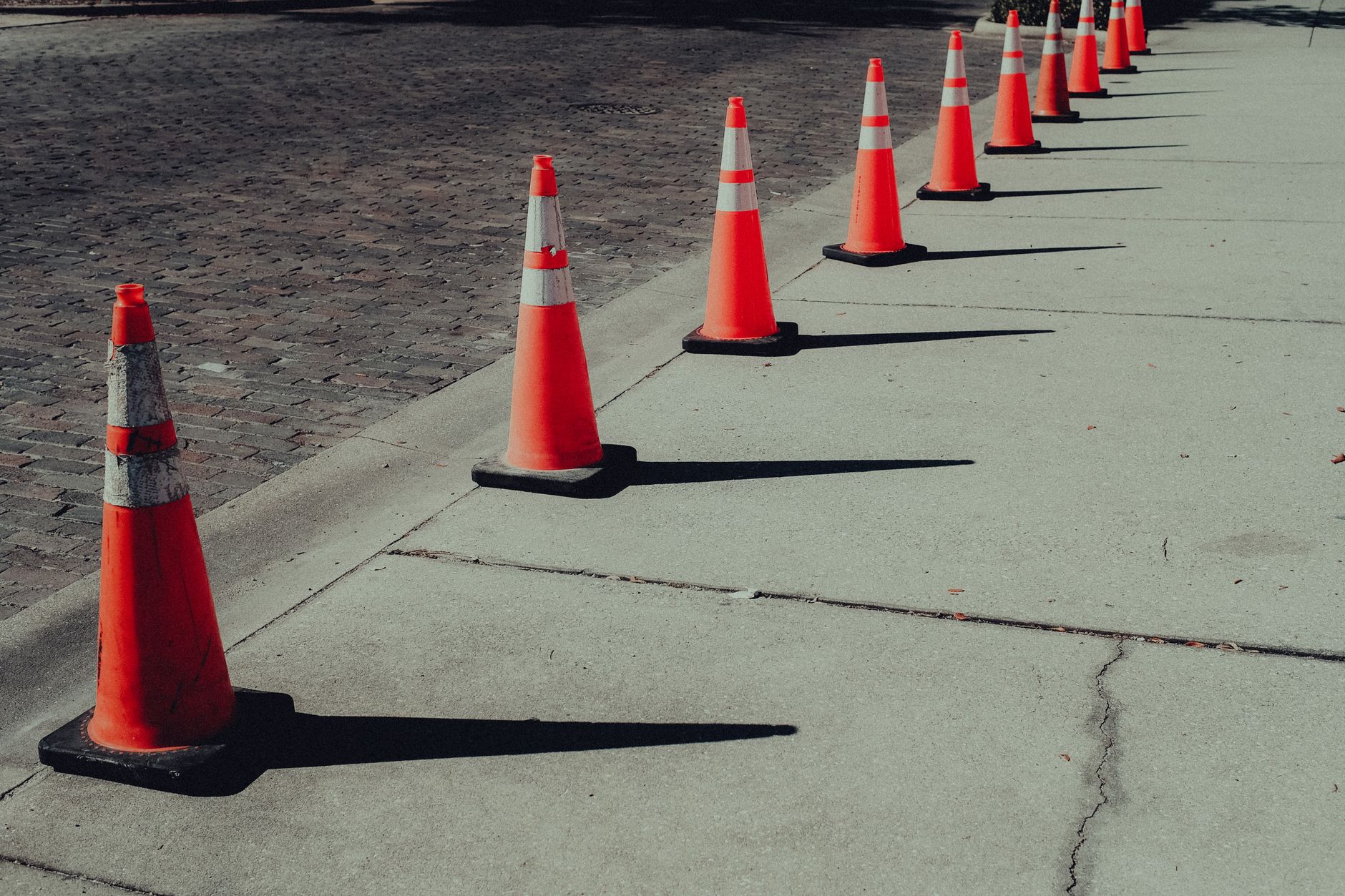
Photo by Connor Scott McManus on Pexels
Get started with a measurable dribbling routine rather than repeating the same comfortable pattern.
How Can You Improve Football Skills Efficiently?
You improve football skills efficiently by identifying one weakness, practising it with deliberate repetitions, adding pressure, and testing the movement in a small-sided game. Three 45-minute sessions per week are sufficient for noticeable progress when every block has a target, a success threshold, and recorded results. Quality beats exhausting volume.
First, review two match clips or ask a coach to identify repeated errors. Then rank the weakness by frequency and consequence: a poor first touch near your own penalty area deserves attention before an unimportant trick. Finally, choose two technical drills and one game-transfer activity for a six-week block.
Use this weekly structure:
- Session 1: 15 minutes of wall passing, 15 minutes of first-touch gates, 10 minutes of weak-foot work, and 5 minutes of notes.
- Session 2: 10 minutes of random dribbling, 15 minutes of 1v1 movement, 15 minutes of finishing, and 5 minutes of recovery.
- Session 3: 10 minutes of acceleration, 25 minutes of a conditioned small-sided game, and 10 minutes reviewing results.
Do not change the programme every training day. Motor learning requires repeated exposure, and six weeks gives enough time to compare baseline and final performance. According to Sport England, progressive activity should be appropriate to ability and recovery status; soreness is not a reliable measure of technical progress.
#3 One-on-One Channel Drill: Best for Beating Defenders
The one-on-one channel drill is best for attacking players who need to improve feints, acceleration, and ball protection against a live opponent. Mark a channel approximately 8 metres long and 4 metres wide, with an attacker, defender, and target line. The attacker scores by dribbling across the line under control; the defender scores by winning possession or forcing the ball outside.
Start with the defender passive for five repetitions, then allow controlled pressure for ten repetitions, and finally play at full intensity for another ten. Record successful escapes, turnovers, and the direction of the first movement. A player who always cuts inside may have technical ability but predictable decision-making, which defenders can exploit quickly.
The most useful coaching cue is to separate the feint from the acceleration. A step-over, shoulder drop, or body swerve is not successful because it looks impressive; it is successful when the defender’s weight shifts and the attacker explodes into the opposite space within two steps. Keep the ball within one stride during the escape, then take a longer touch only after the defender is beaten.
For advanced players, begin each repetition with a different starting angle or a pass from a teammate. This prevents the drill from becoming a rehearsed choreography. See our [Internal Link: advanced dribbling and 1v1 techniques] for more pressure-based progressions.
#4 Four-Corner Passing: Best for Scanning
Four-corner passing is the best passing drill for learning to scan before receiving. Place four players or cones in a 10-by-10-metre square, with one player in the middle. The outside players pass into the centre, who receives on the back foot and plays to a different corner. Rotate the middle player every 60–90 seconds.
The drill develops more than passing technique. Before the ball arrives, the receiver must check both shoulders, identify the next target, adjust the body, and decide whether the first touch should move left or right. Add a passive defender after the basic pattern becomes accurate, then permit interceptions once the group achieves at least 80% successful sequences.
A practical information-gain measure is “scans before reception.” Ask a partner to count visible head checks, not vague claims that the player was aware. Beginners may average one scan; competitive midfielders should work toward two or more when time permits. This is not a rigid law, but it gives feedback that ordinary passing counts miss.
Use both feet and vary the pass speed. Short, slow passes create false confidence, while match-level repetitions require receiving firm balls and protecting the next action. The UEFA Training Ground provides further examples of positional practices that connect technical execution with tactical awareness.
Why Does First Touch Matter More Than Tricks?
First touch matters more than tricks because it determines whether the next pass, dribble, or shot is available before pressure arrives. A controlled touch can create 1–2 metres of usable space, while a poor touch often gives the opponent a direct route to the ball. In match analysis, possession value depends heavily on what the first touch enables.
The first-touch gate drill requires two cones set 1–1.5 metres apart. A partner passes from 8–12 metres away, and the receiver must guide the ball through the gate using the inside, outside, thigh, chest, or sole as appropriate. Complete 30 repetitions on the right side and 30 on the left, recording whether the ball remains within playing distance.
Progress by changing the pass angle, adding a passive opponent behind the receiver, and requiring a specific second action. For example, receive through the gate and pass to a target within two seconds. This links control to decision-making rather than treating the touch as an isolated aesthetic movement.
I will be honest with you: many players practise advanced step-overs because they are enjoyable, then avoid weak-foot receiving because it exposes a weakness. That is backwards. A 2024 review in the Journal of Sports Sciences highlights the importance of representative practice, meaning the drill should preserve the information and decisions found in competition.

Photo by Franco Monsalvo on Pexels
Want to see how tactical habits connect with player performance?
#5 Finishing Under Pressure: Best for Strikers
Finishing under pressure is the best shooting drill for converting technique into goals because it adds movement, limited time, and a defender or goalkeeper. Set up three starting points around the penalty area: central, left, and right. Receive a pass, take no more than two touches, and finish into a designated corner before a recovering defender closes the angle.
Complete 18–24 shots per session, split evenly between both feet and several finishing types. Include instep drives, placed side-foot finishes, low near-post shots, and first-time attempts. Record goals, shots on target, rebounds created, and time from first touch to strike. A shot that misses spectacularly is still a miss; track outcomes without flattering yourself.
The most overlooked variable is the preceding movement. Begin some repetitions with a checking run away from the ball, then spin behind the defender. In other repetitions, drift across the defensive line before receiving. These movements train separation and make the finish more representative of match football than standing beside a stationary ball.
Protect your body by limiting maximum-intensity shooting when technique collapses. Ten accurate shots at 85% intensity are more useful than 30 rushed attempts that overload the hip or groin. For goalkeeping-specific work, use a qualified coach and appropriate safety distances rather than firing uncontrolled shots at close range.
#6 Weak-Foot Circuit: Best for Two-Footed Play
The weak-foot circuit is best for becoming less predictable and reducing avoidable turnovers. Use five stations: 20 inside-foot passes, 20 outside-foot touches, 10 receives across the body, 10 dribbles through gates, and 10 finishes. Complete the circuit three times, resting 60 seconds between rounds, and use the weaker foot for at least 70% of the actions.
Do not expect equal ability immediately. A realistic six-week target is a 15–25% improvement in weak-foot accuracy, measured from the same starting distance and pass speed. If baseline accuracy is 40 out of 60 passes, reaching 48 out of 60 is meaningful. The exact number depends on age, position, previous training, and injury status, so compare yourself against your own data.
A contrarian recommendation is to practise the weak foot early in the session, not only at the end. Fatigue can expose decision errors, but it can also reduce coordination so sharply that the player rehearses compensation. Use fresh technical work first, then finish with a smaller number of pressured weak-foot actions.
The circuit should eventually include football context. Receive on the weaker foot when the opponent is approaching, pass around the corner with the weaker foot, and finish after a change of direction. That is how a technical preference becomes a match advantage.
How Do You Build a Football Training Plan?
You build a football training plan by combining technical repetition, decision pressure, physical preparation, and recovery across a weekly schedule. For most recreational players, three sessions of 45–60 minutes plus one match provide enough stimulus. Every session should identify the skill, number of repetitions, intensity, success rate, and next progression.
Use this planning sequence:
- Diagnose: review match footage and record the three most frequent errors.
- Prioritize: select one primary weakness and one supporting skill for six weeks.
- Dose: begin with 90–150 purposeful repetitions per major technical category.
- Progress: increase pressure, speed, weaker-foot use, or decision complexity—not all four at once.
- Test: repeat the same benchmark every two weeks.
- Recover: allow at least 24 hours before repeating high-intensity sprint or shooting work.
For example, a right winger losing the ball during first contact might complete wall passing, first-touch gates, and 1v1 channels. A central defender misplacing long passes needs aerial control, diagonal passing, and scanning under pressure. Position-specific design prevents the common mistake of copying a professional forward’s routine without considering role or physical demands.
Keep a simple table in a notebook or spreadsheet: date, drill, attempts, successes, errors, perceived effort from 1–10, and pain from 0–10. Stop and seek qualified medical advice if pain is sharp, changes movement, or exceeds normal post-training fatigue. You are not paid to impress your training partner with suffering.
#7 1v1 Defending Mirror Drill: Best for Defenders
The 1v1 defending mirror drill is best for improving defensive stance, lateral movement, timing, and patience. Mark a 6-by-8-metre channel, place an attacker at one end, and require the defender to delay the attacker for five seconds or force them toward a marked sideline. The defender should stay balanced, low, and approximately one arm’s length away.
Begin without tackling. The defender mirrors the attacker’s hips and controls the central lane, then progresses to an active challenge when the attacker takes a loose touch. Record successful delays, forced wide movements, and unnecessary lunges. This data exposes whether a defender is genuinely controlling space or merely making dramatic attempts.
A common error is watching the ball instead of the attacker’s hips. The ball can be feinted; the hips reveal the direction of the body’s actual movement. Another error is standing square with the feet crossed, which makes recovery difficult. Use short lateral steps, maintain a slight angle, and accelerate only when the cue is clear.
Pair the drill with recovery runs. A modern defender may be beaten once and still recover, so defensive quality is not measured only by the initial duel. It also includes the next three seconds: turning, sprinting, communicating, and protecting the most dangerous space.

Photo by Israel Torres on Pexels
#8 Acceleration and Recovery Runs: Best for Football Speed
Acceleration and recovery runs are the best speed drills for football because most decisive movements occur over short distances rather than a single 100-metre sprint. Mark 5, 10, and 20 metres, then complete six starts from different positions: standing, side-on, backpedalling, and after a change of direction. Rest 45–75 seconds between repetitions.
Measure the first 5 metres separately from the full 20 metres. The first split reveals explosive acceleration, while the full time shows whether speed can be maintained. Add football actions after the run, such as receiving a pass, closing an opponent, or finishing. This increases transfer but also raises fatigue, so keep technical accuracy above 75%.
Do not perform maximum sprints on a hard surface without a progressive warm-up. Complete 8–12 minutes of easy movement, mobility, skips, and gradual accelerations first. The American College of Sports Medicine recommends individualized exercise progression and attention to safety, especially when training intensity rises.
Use speed work once or twice weekly, separated from another maximal sprint session by at least 48 hours when possible. Hamstring tightness, altered stride mechanics, or sharp pain are reasons to stop, not challenges to overcome. Your net position is simple: a missed session is cheaper than a serious injury.
What Should You Track to Prove Football Improvement?
Track successful actions, error rates, decision time, weak-foot output, and physical benchmarks to prove football improvement. A useful dashboard includes 40-pass accuracy, first-touch gate success, 1v1 escape percentage, shots on target, 5-metre acceleration time, and scanning frequency. Compare tests under similar conditions every two weeks.
A practical scorecard might look like this:
- Passing: 34/40 accurate with the right foot; 29/40 with the left.
- First touch: 24/30 controls through the correct gate.
- Dribbling: 5/6 successful escapes against a live defender.
- Finishing: 12/20 shots on target, with 7 goals.
- Speed: 1.18 seconds over 5 metres and 3.42 seconds over 20 metres.
- Decision-making: 75% correct responses to partner cues.
The information-gain point is that percentage alone can mislead. If you complete 9/10 successful actions, the sample is too small to establish reliable progress. Use at least 30 repetitions for technical tests and repeat them at the same distance, surface, and intensity. Also record fatigue, because an improvement while fresh may disappear during the final 15 minutes of a match.
Review the numbers weekly, but adjust the plan only every two weeks. Emotional reactions to one bad session create unstable programming. Tactical Review uses the same principle when examining player statistics and tournament performance: a single result is evidence, not a conclusion.
#9 Small-Sided Games: Best for Match Transfer
Small-sided games are the best test of whether isolated football skills survive pressure, because they combine space, opponents, teammates, transitions, and fatigue. Use 3v3, 4v4, or 5v5 formats on a pitch sized to the learning goal. Smaller areas increase pressure and touches; larger areas create more running and passing options.
Condition the game with one clear rule. For first-touch development, award a bonus point when a player receives across the body and plays forward. For dribbling, award two points for a successful 1v1 escape. For scanning and combination play, require a third-player pass before a goal counts. Avoid adding five rules at once, because players stop playing and start solving the coach’s puzzle.
Record actions per player rather than only goals and assists. Count forward passes, recoveries, lost possessions, pressing efforts, successful turns, and decisions made within two seconds. This exposes useful contributions that casual spectators miss. A midfielder with zero goals may still dominate the game by receiving under pressure and connecting 20 accurate passes.
Finish with a brief review: what worked, what failed, and which drill should receive priority next week. If the skill disappears in games, reduce the drill’s complexity temporarily, then reintroduce pressure in smaller steps. Progress is a controlled staircase, not a leap.
Which Football Skills Should You Improve First?
Improve first touch, passing accuracy, scanning, and acceleration before advanced tricks because these skills influence more possessions and match situations. The best priority depends on position, but a repeated error near pressure usually has greater value than an occasional lack of flair. Start with the weakness that costs your team the most playable actions.
Choose your route using this guide:
- Beginner: wall passing, first-touch gates, basic dribbling, and weak-foot work.
- Winger: random dribbling, 1v1 channels, acceleration, and crossing after movement.
- Midfielder: four-corner passing, scanning, receiving under pressure, and small-sided games.
- Striker: movement before receiving, finishing under pressure, weak-foot shots, and pressing.
- Defender: aerial control, diagonal passing, mirror defending, and recovery runs.
- Goalkeeper: distribution, handling, footwork, reaction saves, and coached diving technique.
Avoid changing the priority because a social-media clip makes another move look exciting. Skill development is an investment: measure expected match value, repetition quality, and injury cost. Tactical Review’s football coverage applies the same rational approach to FIFA World Cup 2026 analysis, where team shape and repeatable actions matter more than isolated highlights.
[Internal Link: FIFA World Cup 2026 team tactics and player statistics]
How Long Does It Take to Improve Football Skills?
Most players can feel better control within two to four weeks and demonstrate measurable improvement after six weeks of three focused sessions per week. Noticeable match impact often takes 8–12 weeks because technical gains must survive opponents, fatigue, pressure, and tactical complexity. Training consistency determines the timeline more than one exceptionally long session.
Use a six-week progression:
- Weeks 1–2: controlled technique, both feet, 70–80% intensity.
- Weeks 3–4: faster execution, visual cues, passive defenders, and shorter decision windows.
- Weeks 5–6: live opponents, small-sided games, fatigue-based tests, and match review.
A typical 45-minute session can include 8 minutes of warm-up, 12 minutes of technical repetition, 12 minutes of pressure work, 8 minutes of game transfer, and 5 minutes of notes and cooldown. Players under 16, older adults, and anyone returning from injury should modify volume with a qualified coach or clinician.
The clearest edge case is missed recovery. If your first-touch accuracy falls from 82% to 58% for two sessions and your legs feel unusually heavy, adding more repetitions is irrational. Reduce volume by 20–30% for several days, preserve technique, and reassess. More work is not automatically more progress.
Which Drill Programme Should You Pick?
Pick the programme that matches your largest repeatable match error, your available equipment, and your recovery capacity. Wall passing is the best overall foundation; one-on-one channels suit attackers; four-corner passing helps midfielders; mirror defending serves defenders; and small-sided games reveal whether improvement transfers. Start with two drills, not ten.
For a simple choice:
- Losing possession on the first touch: wall passing plus first-touch gates.
- Unable to beat opponents: random cones plus one-on-one channels.
- Missing chances: movement patterns plus finishing under pressure.
- Defending too aggressively: mirror defending plus recovery runs.
- Playing safely and slowly: four-corner passing plus conditioned games.
- Weak-foot avoidance: weak-foot circuit plus pressured passing.
Test your baseline before beginning and repeat it at the end of week six. Keep the same ball, pitch surface, distance, and scoring method wherever possible. If the improvement is real, it should appear in both the drill data and match footage; if only the drill improves, the pressure level is still too low.
The conclusion is not complicated: train a weakness three times weekly, measure at least 30 meaningful attempts, add pressure gradually, and protect recovery. That process will improve football skills more reliably than copying Lionel Messi’s five-hour routine or collecting impressive drills without a plan.
See the full Tactical Review approach to football performance and tournament insight.
Photo by Franco Monsalvo on Pexels
Frequently Asked Questions
Q: What does improving football skills actually mean?
A: Improving football skills means increasing the accuracy, speed, consistency, and match usefulness of technical actions. It includes passing, first touch, dribbling, shooting, defending, scanning, and movement under pressure. A player should measure successful actions and errors rather than relying only on confidence. For example, improving from 24/40 to 32/40 accurate weak-foot passes is clearer evidence than simply feeling more comfortable.
Q: How do I start improving football skills as a beginner?
A: Start with three 45-minute sessions per week using wall passing, first-touch gates, basic dribbling, and weak-foot repetitions. Spend the first 8 minutes warming up, then complete 20–30 purposeful repetitions per technical block. Keep the speed controlled until accuracy reaches approximately 80%, then add movement or a passive defender. A ball, six cones, a wall, and a notebook are sufficient for the first month.
Q: What is the difference between football drills and small-sided games?
A: Football drills isolate or emphasize one skill, while small-sided games combine skills with opponents, teammates, space, and decisions. Wall passing can improve receiving mechanics, but a 4v4 game tests whether that receiving action works under pressure. Use drills to build the movement and conditioned games to test transfer. Neither format should completely replace the other.
Q: Why do my football skills disappear during matches?
A: Skills often disappear during matches because training lacks pressure, scanning, fatigue, or realistic decision cues. A player may complete 90% of stationary passes but struggle when an opponent closes from behind. Add passive pressure, reduce decision time, vary pass angles, and finish sessions with 3v3 or 4v4 games. Also check whether anxiety, poor positioning, or exhaustion is causing the technical error.
Q: How much does it cost to improve football skills?
A: Improving football skills can cost nothing if you use a ball, wall, open space, and improvised markers. Six cones typically make training more organized, while a coach, academy, GPS device, or private session adds expense but is not mandatory. Spend first on consistent practice and injury-safe footwear. Data from a simple notebook is often more useful than purchasing equipment you do not use.
Q: Is practising with the weaker foot worth it?
A: Yes, weaker-foot practice is worth it because it creates more passing, receiving, and finishing options under pressure. Aim for at least 70% weaker-foot actions in a dedicated circuit, but retain some stronger-foot work to maintain overall quality. Measure progress with 30–60 repetitions from a fixed distance. A 15–25% improvement over six weeks is a practical initial target for many developing players.
Q: How can I avoid injury while training football skills?
A: Avoid injury by warming up progressively, increasing intensity gradually, resting between maximal efforts, and stopping when sharp pain or altered movement appears. Use 8–12 minutes of easy movement, mobility, skips, and acceleration before sprinting or shooting at full speed. Separate intense sprint sessions by approximately 48 hours when possible. Players returning from injury should follow guidance from a qualified medical professional rather than copying an online programme.
Thank you for reading.
Tactical Review · Strategic Archive