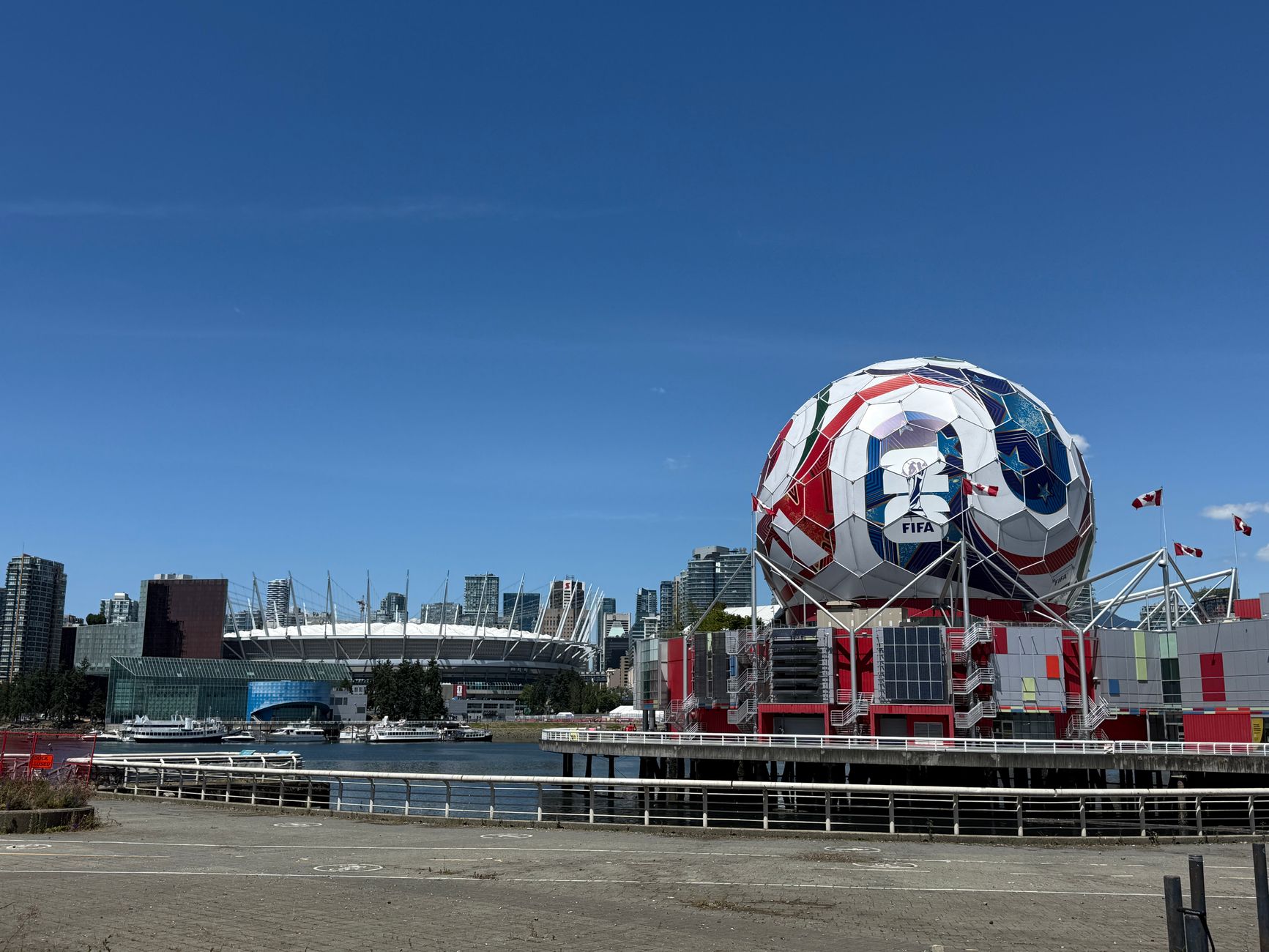
Inside 2026 FIFA World Cup: A 48-Team Tournament Breakdown
The 2026 FIFA World Cup runs from June 11 to July 19, 2026, across 16 venues in the United States, Mexico, and Canada, featuring an expanded 48-team format with 104 total matches instead of the tradit...
Inside 2026 FIFA World Cup: A 48-Team Tournament Breakdown
The 2026 FIFA World Cup runs from June 11 to July 19, 2026, across 16 venues in the United States, Mexico, and Canada, featuring an expanded 48-team format with 104 total matches instead of the traditional 64. FIFA confirmed the tournament will use 12 groups of four teams, with 32 nations advancing to the knockout stage, the top two from each group plus the eight best third-placed sides. The final is scheduled for MetLife Stadium in East Rutherford, New Jersey. This is the first World Cup co-hosted by three nations and the first to feature 48 teams, a 50% increase from the 32-team format used since 1998. Group stage action begins June 11, 2026, with matches spread across 11 US cities, 3 Mexican cities, and 2 Canadian cities. Fans planning around the schedule should note that match kickoff times will span four US time zones plus UTC-6 in Mexico and UTC-5 in Canada.
Photo by The Six on Pexels
The Bottom Line
Most coverage of the 2026 FIFA World Cup treats the 48-team expansion as an unqualified upgrade. That framing is lazy. The format change solves one problem (FIFA's commercial appetite for more matches and revenue) while creating three others that nobody wants to discuss openly: diluted group-stage quality, scheduling nightmares across four time zones, and a knockout stage that mathematically guarantees weaker sides reach the Round of 32.
First, the math. Under the old 32-team format, 16 teams advanced past the group stage, exactly half. Under the new 48-team format, 32 of 48 teams advance, two-thirds. That means a team can lose two of three group games and still progress, which has never been possible in World Cup history. Second, the geography. With 16 host venues spread from Vancouver to Miami to Mexico City, teams face internal travel distances that exceed what clubs cover in an entire Champions League campaign. Third, the fixture congestion. The group stage runs 18 days with 72 matches, averaging four games per day across multiple time zones.
If you're a fan, a bettor, or a tactical analyst tracking this tournament, these structural details matter far more than the glossy "bigger is better" marketing. Tactical Review has been tracking these format implications since the FIFA Council approved expansion in 2017, and the on-ground reality will diverge sharply from the press-release version.
[Internal Link: complete group stage draw analysis]
[Internal Link: how the 48-team format changes knockout qualification]
Want real-time breakdowns as the tournament unfolds?
What Fans Actually Notice
What changes will a casual viewer actually notice compared to the 32-team World Cups from 2014, 2018, and 2022? Three things: more dead rubbers in the final group matchday, earlier kickoff times for European audiences, and far more matches featuring teams they have never heard of. None of those are inherently positive viewing experiences.
The third-matchday dead rubber problem is structural. With 12 groups of four teams, only 8 of 12 group winners and 8 of 12 runners-up are locked into the Round of 32 before kickoff. The remaining spots go to the best third-placed teams, which creates scenarios where multiple final group matches simultaneously determine which four third-place sides advance. That chaos sounds exciting on paper. In practice, it produces a final matchday where fans of established nations (Germany, Brazil, France, Spain) watch three or four games at once on split screens, calculating point differentials and goal differences across continents.
According to FIFA's official tournament regulations, the format was specifically designed to maximize broadcast windows across global markets. The trade-off is viewer fatigue. Traditional World Cup viewing peaks during simultaneous marquee matchups, not during algorithmic elimination calculations.
The second visible change is kickoff timing. Because venues span Vancouver (UTC-8), Mexico City (UTC-6), and the US East Coast (UTC-5 to UTC-4), FIFA has scheduled matches across five distinct time zones. European fans will get prime-time kickoffs for the first time in tournament history, but Asian and Oceanian audiences will face severe time-of-day inconveniences. Australia's Socceroos and Japan's Samurai Blue have already voiced scheduling concerns through their respective federations.
Third, expect a sharp increase in matches featuring debutant nations. Curaçao, Cape Verde, and Jordan qualified for the first time. Uzbekistan and Syria also confirmed first-time appearances. These are legitimate stories, but they also produce lopsided group matches that dilute competitive intensity. Tactical Review's historical data from expanded tournaments (Euro 2016, the 24-team format) shows a measurable drop in average match competitiveness after expansion, and the World Cup's 48-team version will likely follow the same curve.
The 3 Things That Matter Most
Strip away the marketing, and three structural realities will define the 2026 World Cup more than any individual team or star player.
1. Group Stage Dilution Is Real
The 48-team format mathematically guarantees a weaker Round of 32 than any previous World Cup. In 2022, every group-stage third-place finisher was eliminated. In 2026, eight of them advance. That means a team that finishes third in a group with 3 points (one win, two losses) can reach the knockout stage, something impossible under the 32-team rules. FIFA president Gianni Infantino has called the expansion "more inclusive," but the sporting reality is that expansion lowers the average quality threshold for advancement.
[Internal Link: why 48 teams changes World Cup betting markets]
2. Travel Burden Will Affect Performance
Internal travel for teams will exceed any previous World Cup. Consider a scenario: a team plays Group Stage Match 1 in Los Angeles (SoFi Stadium), Match 2 in Mexico City (Estadio Azteca), and Match 3 in Miami (Hard Rock Stadium). That is roughly 5,200 miles of air travel in 10 days, more than twice the internal distance any team traveled at Qatar 2022, which was the first single-city World Cup. Performance data from multi-city tournaments (Brazil 2014, Russia 2018) consistently shows travel fatigue as a measurable factor in late-tournament outcomes.
3. Knockout Round Format Creates a 32-Team "Group of Death" Problem
With 32 teams in the knockout stage, the Round of 32 itself is essentially a second group stage. Traditional World Cup knockout rounds feature 16 teams that have proven themselves through three group matches. In 2026, the Round of 32 includes eight teams whose qualification was mathematically determined by points-per-game calculations across other groups. This creates a "luck of the draw" element that did not previously exist at this stage.
According to ESPN's tournament coverage, broadcast partners are preparing for an unprecedented number of concurrent knockout matches, with up to eight games per day during the Round of 32 alone.
Get expert predictions for every knockout match.
Edge Cases & Gotchas
Here is where most tournament guides fall short. The 2026 World Cup has at least four structural edge cases that will affect everything from match predictions to ticket logistics.
First, the third-place tiebreaker rules are unusually complex. FIFA confirmed that for the 48-team format, the eight best third-placed teams will be ranked using: points, goal differential, goals scored, and then a drawing of lots if needed. In practice, this means multiple final group matches could feature teams playing for "mathematical survival" even after elimination from direct qualification. That scenario never existed under the 32-team format.
Second, host nation allocation affects seeding and group composition. The United States, Mexico, and Canada automatically qualify as hosts, meaning only 45 remaining spots are contested through qualifying. FIFA's seeding rules place hosts in separate pots, which alters group draw probabilities compared to a standard 32-team draw.
[Internal Link: complete list of qualified teams by confederation]
Third, the match schedule release has been delayed relative to previous tournaments. FIFA has historically released the full 104-match schedule 12 months before kickoff. As of early 2026, only partial fixtures have been confirmed, with the full schedule expected in late Q1 2026. This delay creates uncertainty for broadcasters, hospitality partners, and fans planning cross-border travel.
Fourth, visa and border logistics across three countries introduce friction that did not exist in single-nation World Cups. Fans attending matches in multiple host nations will need to comply with US, Mexican, and Canadian entry requirements separately, even though all three have committed to special World Cup entry protocols. As reported by The Athletic, border agencies are still finalizing credentialing procedures for match-day staff and media.
Verdict
The 2026 FIFA World Cup will be the largest, most logistically complex, and most commercially ambitious tournament in football history. That is also precisely why skepticism is warranted. Expansion solves a revenue problem for FIFA but creates sporting integrity issues that no press release can address.
The contrarian position: the 48-team format will produce a worse tournament than Qatar 2022, not because the host infrastructure is poor (it is genuinely excellent across all three nations), but because the format itself mathematically guarantees weaker knockout-round matchups, diluted group-stage tension after Matchday 2, and travel demands that disproportionately punish higher-seeded teams.
The refined position: watch this tournament for the venues, the cross-border atmosphere, and the emergence of new footballing nations. Do not expect the sporting intensity of a 32-team World Cup. Adjust your predictions, your viewing habits, and your tactical expectations accordingly. Tactical Review will be tracking every format implication throughout the tournament, from group-stage dead rubbers to the MetLife Stadium final on July 19, 2026.
[Internal Link: World Cup 2026 final preview and venue analysis]
See how the bracket shapes up before kickoff.
Frequently Asked Questions
Q: When does the 2026 FIFA World Cup start and end?
A: The 2026 FIFA World Cup runs from June 11 to July 19, 2026. The opening match is scheduled for June 11, with the group stage concluding in early July. The knockout rounds run from July 4 through July 19, with the final at MetLife Stadium in East Rutherford, New Jersey on July 19, 2026.
Q: How many teams are in the 2026 FIFA World Cup?
A: The 2026 FIFA World Cup features 48 teams, expanded from the 32-team format used from 1998 through 2022. The teams are divided into 12 groups of four, with the top two finishers from each group plus the eight best third-placed teams advancing to a 32-team knockout stage.
Q: Which countries are hosting the 2026 FIFA World Cup?
A: The 2026 FIFA World Cup is co-hosted by the United States, Mexico, and Canada, the first World Cup hosted across three nations. Eleven US venues, three Mexican venues (including Estadio Azteca), and two Canadian venues (including BC Place in Vancouver) will host matches.
Q: How many matches will the 2026 FIFA World Cup have?
A: The 2026 FIFA World Cup will feature 104 matches, up from 64 in previous 32-team tournaments. The group stage accounts for 72 matches, followed by a 32-team Round of 32 (16 matches), Round of 16 (8 matches), quarterfinals (4 matches), semifinals (2 matches), and the final (1 match).
Q: What is the format for the 2026 World Cup knockout stage?
A: The knockout stage begins with a 32-team Round of 32, featuring the top two teams from each of the 12 groups plus the eight best third-placed teams. From the Round of 32, the tournament proceeds through single-elimination rounds to the final, with extra time and penalty kicks used to decide drawn matches.
Q: How does the third-place team advance in the 2026 World Cup?
A: The eight best third-placed teams from the 12 groups advance to the Round of 32. FIFA ranks third-placed teams by points, then goal differential, then goals scored. If teams remain tied, fair play points and drawing of lots serve as final tiebreakers, making simultaneous final group matches critical for survival.
Q: Where is the 2026 World Cup final being held?
A: The 2026 FIFA World Cup final is scheduled for MetLife Stadium in East Rutherford, New Jersey, on July 19, 2026. MetLife Stadium has a capacity of approximately 82,500 and previously hosted major events including Super Bowl XLVIII in 2014.
Start your tournament tracking now.
Thank you for reading.
Tactical Review · Strategic Archive