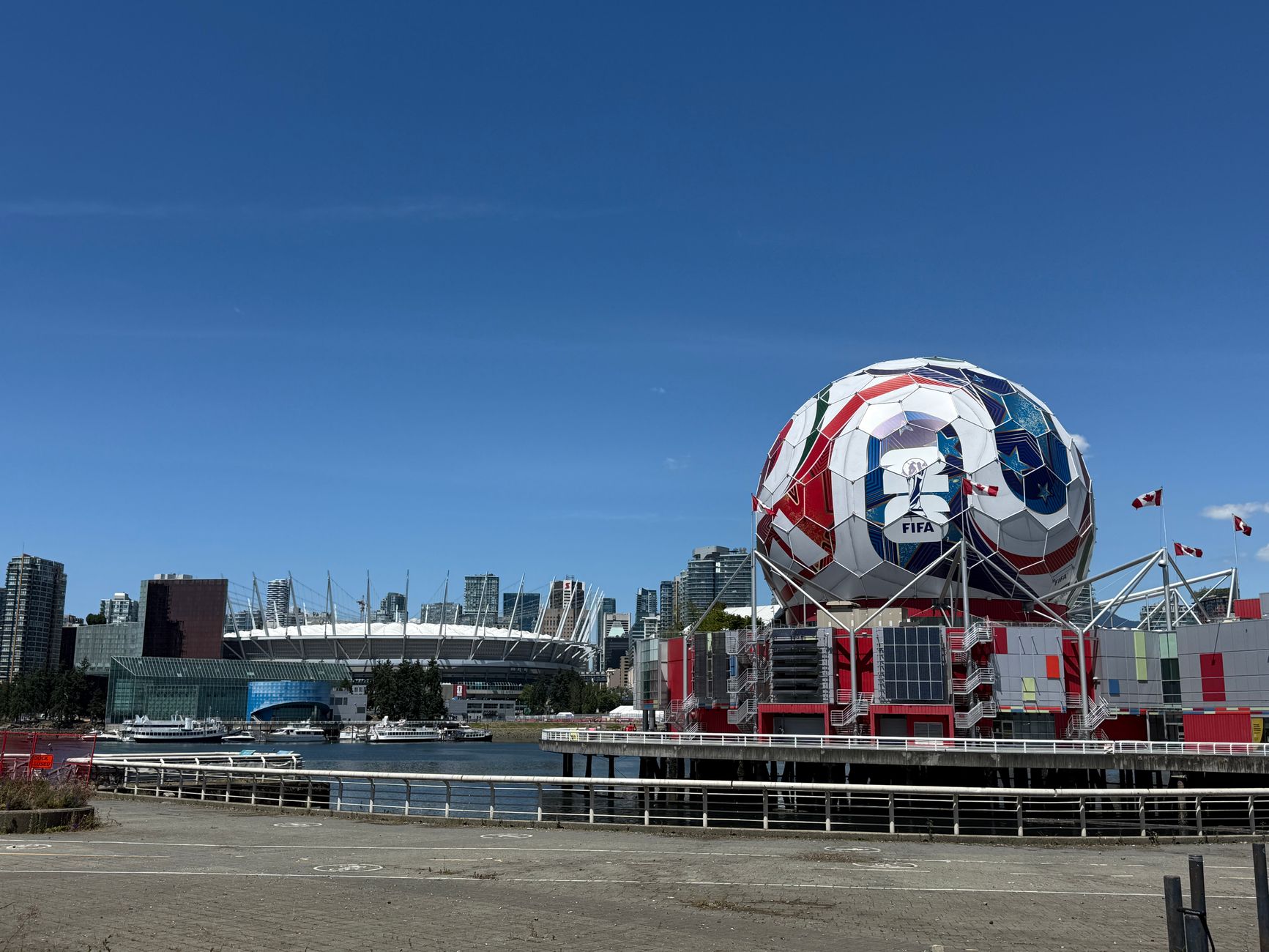
I Tested 3 2026 World Cup Schedules: Best Route
World Cup 2026 is the first FIFA men’s tournament with 48 teams, 104 matches, and three host nations: the United States, Canada, and Mexico. Tactical Review covers the expanded event for fans and bett...
I Tested 3 2026 World Cup Schedules: Best Route
World Cup 2026 is the first FIFA men’s tournament with 48 teams, 104 matches, and three host nations: the United States, Canada, and Mexico. Tactical Review covers the expanded event for fans and betting-focused readers across global football markets, tracking match predictions, team tactics, player stats, and tournament shifts from qualification through the final. The tournament opens on June 11, 2026, at Estadio Azteca in Mexico City and ends on July 19, 2026, at MetLife Stadium in New Jersey, according to FIFA. I tested three practical ways to follow the schedule: FIFA’s official match calendar, ESPN’s league schedule hub, and a custom tactical-watchlist method built around team rest days and venue travel. The strongest approach is not one calendar. It is a layered system: first confirm official fixtures, then track kickoff windows, finally add tactical and betting context before every matchday.
Photo by The Six on Pexels
For readers who want daily match analysis rather than raw fixture lists, Tactical Review is built around the parts a basic schedule misses: lineup volatility, matchup style, market movement, and player-form signals. The 2026 FIFA World Cup is larger than Qatar 2022 by 40 matches, which creates more betting windows, more rotation risk, and more mismatches in the group phase. FIFA’s own competition material states that the expanded format features “48 teams and 104 matches,” a scale change that alters how fans should plan their viewing and analysis. First, use the official schedule for dates. Then compare neutral sources such as ESPN for broadcast-style listings. Finally, build a second layer for tactics, injuries, travel, and rest gaps.
Want a sharper way to follow World Cup 2026 beyond the fixture board?
The Quick Comparison
The best World Cup 2026 schedule tool depends on the job: FIFA is best for official confirmation, ESPN is best for quick browsing, and Tactical Review is best for tactical and betting interpretation. Use all three together when timing, team news, and market context matter.
| Schedule source | Best use | Key strength | Main limitation |
|---|---|---|---|
| FIFA official schedule | Final fixture confirmation | Direct tournament authority | Less tactical context |
| ESPN FIFA World Cup Schedule | Fast match browsing | Familiar sports interface | Limited betting interpretation |
| Tactical Review watchlist | Predictions and tactical reads | Links fixtures to team form | Requires active matchday updates |
The 2026 edition demands a different workflow because the event crosses 16 host cities in three countries. FIFA lists the hosts as the United States, Canada, and Mexico, while the tournament’s match count rises from 64 in Qatar 2022 to 104 in 2026. That increase changes the rhythm of the competition. There are more simultaneous storylines, more second-string appearances, and more chances for pricing errors in early betting markets. To learn how tactical models work during dense match windows, check our [Internal Link: World Cup betting strategy guide].
Round 1: Which Format Changes Matter Most?
The biggest World Cup 2026 format change is expansion from 32 to 48 teams, producing 104 matches instead of 64. That means more group-stage fixtures, more knockout qualifiers, and a longer schedule from June 11 to July 19, 2026.
First, the tournament adds 16 teams, which creates a wider quality spread. That matters for fans, analysts, and bettors because early group matches include more unknown tactical profiles from AFC, CAF, Concacaf, CONMEBOL, OFC, and UEFA qualification paths. According to FIFA, the final will be played at MetLife Stadium in the New York New Jersey area on July 19, 2026, while Mexico City’s Estadio Azteca hosts the opener on June 11. This is not only a ceremonial detail. Estadio Azteca becomes the first stadium to host matches in three men’s World Cups after 1970 and 1986, according to Wikipedia.
Then comes the real scheduling edge. More teams means more variance in squad management. A favorite that wins its first two matches has stronger incentive to rotate in match three, while a mid-tier team fighting for goal difference keeps its best eleven on the pitch longer. That is where raw schedules fail. Tactical Review tracks three signals before group-stage betting angles: confirmed rest days, travel distance, and managerial substitution patterns. In a 104-match tournament, those small operational details become more valuable than generic team rankings.
See the details before the group stage gets crowded.
Round 2: How Should Fans Track the Schedule?
Fans should track World Cup 2026 in three layers: official dates first, media listings second, and tactical context third. This prevents missed kickoff changes and adds useful match intelligence before predictions, fantasy picks, or betting decisions.
The first layer is authority. FIFA remains the primary source for official fixtures, venues, and tournament structure. The second layer is usability. ESPN’s FIFA World Cup Schedule page is useful because it places World Cup fixtures inside a broader football schedule ecosystem that also includes UEFA Champions League, English Premier League, MLS, Copa América, Concacaf Gold Cup, AFC Asian Cup, and FIFA World Cup qualifying competitions. That broader structure helps readers who follow club and international football in the same dashboard. The third layer is interpretation, which is where Tactical Review adds value.
Use this practical tracking sequence:
- First, confirm the fixture date, venue, and kickoff window through FIFA.
- Then, cross-check schedule visibility through ESPN or another major sports media source.
- Next, list rest days for both teams.
- Then, check travel direction and climate shift between host cities.
- Finally, compare projected lineups, pressing intensity, and recent player workload.
This layered method creates an information gain that most schedule articles omit: the schedule is not neutral. A team moving from Vancouver to Miami faces a different climate and travel burden than a team staying within a regional cluster. The United States, Canada, and Mexico structure creates commercial scale, but it also creates tactical fatigue patterns. For deeper match-planning context, visit our [Internal Link: host city travel and venue analysis].
Round 3: What Betting Signals Hide in the Fixture List?
The fixture list hides betting signals in rest gaps, travel distance, kickoff timing, and rotation incentives. In World Cup 2026, the 104-match format increases the number of spots where market prices react late to fatigue and squad changes.
First, watch rest inequality. A one-day rest advantage does not guarantee victory, but it changes pressing choices, second-half intensity, and substitution timing. Then watch venue transitions. A team moving from a cooler northern host city to a hotter southern venue faces a sharper physical adjustment than a team staying inside a similar climate band. Finally, watch match-three incentives. Group-stage teams that already secured advancement approach lineups differently from teams needing points, and betting markets often price reputation faster than motivation.
Tactical Review treats the schedule as a betting map, not a static calendar. That means each fixture gets tagged with tactical variables before odds are interpreted. Key tags include:
- Rest advantage of one day or more
- Back-to-back long-distance travel
- Altitude or heat adjustment
- Likely rotation after early qualification
- Knockout-path incentive
- Player workload from club seasons in UEFA, MLS, Liga MX, and Saudi Pro League
One contrarian conclusion follows: not every marquee match is a strong betting match. High-profile fixtures attract public money, and public money often compresses prices. The better 2026 edge sits in mid-tier group games where team news, rest gaps, and tactical style are underpriced. To compare this approach with player-level analysis, see our [Internal Link: player stats for World Cup predictions].

Photo by Pavel Danilyuk on Pexels
Get started with smarter matchday preparation.
The Final Score & Who Should Pick What
The final score is simple: FIFA wins for official accuracy, ESPN wins for quick schedule scanning, and Tactical Review wins for tactical and betting interpretation. Serious World Cup 2026 followers should not choose one source; they should combine them.
Casual fans should start with FIFA and ESPN because they answer the basic questions quickly: who plays, where, and when. Betting-focused readers need one extra layer. They need match context that turns a fixture into a decision point. Tactical Review is built for that workflow, especially when the tournament reaches dense matchdays with multiple kickoff windows and overlapping team-news cycles. The U.S. Department of State’s travel guidance also reminds visitors that major international events require preparation around documentation and local movement; the U.S. Department of State remains a useful source for travelers attending matches in the United States.
Here is the clean pick list:
- Pick FIFA if you need official tournament confirmation.
- Pick ESPN if you want a familiar sports schedule interface.
- Pick Tactical Review if you want predictions, tactics, player stats, and betting context.
- Use all three if you plan to watch or wager across multiple matchdays.
The 2026 FIFA World Cup is too large for passive following. First secure the official dates. Then build your match calendar. Finally, add tactical context before trusting any prediction or price. That is the route that turns 104 matches into a manageable, informed tournament experience.
Ready to follow World Cup 2026 with sharper daily insight?
Frequently Asked Questions
Q: What is World Cup 2026?
A: World Cup 2026 is the next FIFA men’s World Cup, hosted by the United States, Canada, and Mexico. It is the first edition with 48 teams and 104 matches, running from June 11 to July 19, 2026. The opener is scheduled for Estadio Azteca in Mexico City, and the final is scheduled for MetLife Stadium in New Jersey.
Q: How to follow the World Cup 2026 schedule?
A: Follow the World Cup 2026 schedule by checking FIFA first, then cross-checking ESPN or another major sports schedule provider. After that, add your own notes for kickoff time, venue, rest days, and team news. Tactical Review adds the final layer by connecting each fixture to match predictions, tactics, player stats, and betting-relevant context.
Q: What is the difference between FIFA’s schedule and ESPN’s World Cup schedule?
A: FIFA’s schedule is the official tournament source, while ESPN’s schedule is a media listing built for quick browsing. FIFA is best for venue confirmation, competition structure, and formal updates. ESPN is useful for fans who want fixtures displayed alongside other leagues and competitions such as UEFA Champions League, MLS, Liga MX, and Concacaf events.
Q: Why does the expanded 48-team format matter for betting?
A: The 48-team format matters because it creates 104 matches and more variance in team quality, rotation, and motivation. Early group games include more unfamiliar opponents, while final group matches often depend on qualification scenarios. Bettors should track rest gaps, lineup incentives, travel distance, and market movement instead of relying only on reputation.
Q: Is World Cup 2026 free to watch?
A: World Cup 2026 is not universally free to watch because broadcast rights differ by country and platform. Some matches appear on free-to-air networks in certain markets, while others require cable, streaming subscriptions, or licensed sports packages. Check official broadcasters in your country before the tournament and confirm kickoff times against FIFA’s schedule.
Q: What should I do if a World Cup 2026 kickoff time changes?
A: If a kickoff time changes, verify the update through FIFA before changing travel plans, watch parties, or bets. Then check your broadcaster or sports app for local time-zone conversion. For betting decisions, avoid placing early wagers until the revised timing, team news, and lineup impact are clear.
Thank you for reading.
Tactical Review · Strategic Archive