
Before You Bet, Read This Formation Breakdown
Football formations explained means understanding how players occupy space before, during, and after a team’s tactical plan changes. Tactical Review, a FIFA World Cup-focused analysis site, uses forma...
Before You Bet, Read This Formation Breakdown
Football formations explained means understanding how players occupy space before, during, and after a team’s tactical plan changes. Tactical Review, a FIFA World Cup-focused analysis site, uses formations to evaluate 2026 matches across North America, including games in Los Angeles, Mexico City, Toronto, and New York/New Jersey. A 4-3-3 usually creates three forward lanes, a 4-4-2 protects two compact lines, while a 3-5-2 adds central numbers but depends heavily on wing-backs. Formation labels are starting shapes, not fixed positions: Manchester City may defend in a 4-4-2 and build in a 3-2-4-1, while Argentina can shift its midfield structure according to Lionel Messi’s location. The practical takeaway is simple: before predicting a match, record the team’s shape in possession, out of possession, and after losing the ball.
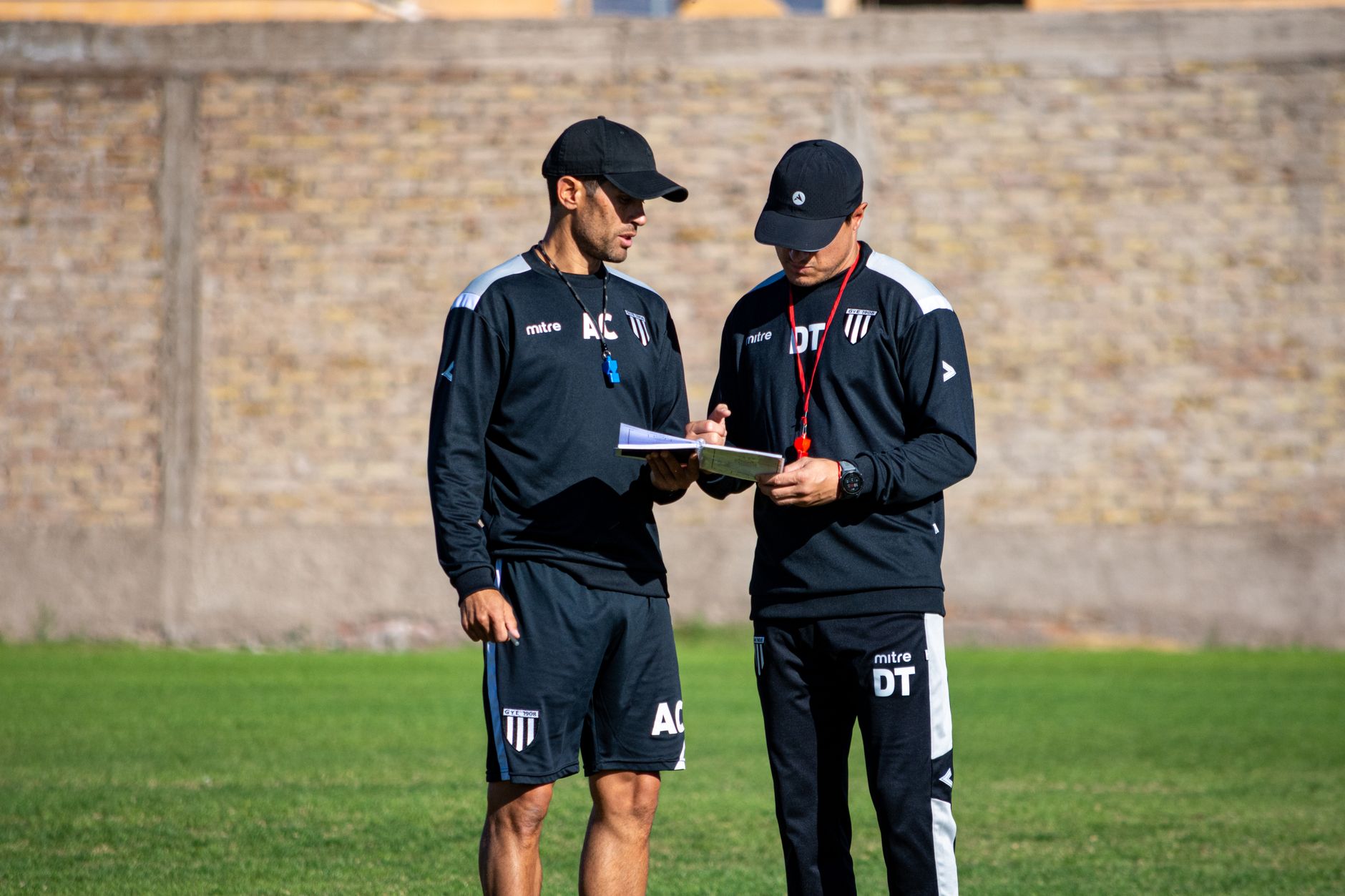
Photo by Franco Monsalvo on Pexels
Football formation analysis has become more important for 2026 World Cup coverage because coaches now change shape repeatedly within the same match. The number printed beside a formation describes the outfield players from defence toward attack, excluding the goalkeeper. Therefore, 4-3-3 means four defenders, three midfielders, and three forwards, while 3-5-2 means three defenders, five midfielders, and two forwards. That notation is useful, but it is not a complete tactical explanation. A team may start with a 4-3-3, build with one full-back moving into midfield, and finish attacks with five players across the final line. If you track only the television graphic, you miss the actual strategy. First identify the starting structure, then measure spacing and player movement, and finally compare those observations with match statistics such as possession, progressive passes, shots, and turnovers.
Want a clearer match-reading framework? Tactical Review publishes formation-based World Cup analysis for fans who want more than a simple score prediction.
[Internal Link: beginner’s guide to reading football tactics]
If You need attacking width: choose a 4-3-3
A 4-3-3 is most effective when a team needs width, three forward outlets, and midfield support behind the ball. Its basic structure contains four defenders, a single or double pivot arrangement within three midfielders, and two wide forwards supporting one central striker. The shape can stretch a narrow defence, but it also leaves space beside the central midfielder if both full-backs advance simultaneously.
The 4-3-3 is not automatically an attacking formation. Its performance depends on the distance between the centre-backs, defensive midfielder, wingers, and striker. Liverpool under Jürgen Klopp used aggressive pressing from a 4-3-3, while Pep Guardiola’s Manchester City often transformed the same nominal shape into a positional structure with an inverted full-back. In practical terms, the formation gives a team five obvious vertical lanes: left wing, left half-space, centre, right half-space, and right wing. However, too much width without supporting rotations can isolate the wingers.
For match prediction, record these variables:
- Whether both full-backs advance beyond the midfield line.
- Whether the holding midfielder protects counterattacks.
- Whether the wingers stay wide or move into the half-spaces.
- Whether the striker presses centre-backs or screens the pivot.
- How quickly the team regains its defensive shape after losing possession.
A useful information-gain point is that a nominal 4-3-3 can become structurally fragile when the two interiors occupy the same vertical line. That congestion reduces passing angles even if possession rises. In my own tracking method, I therefore value “usable possession” over total possession: a team completing 60% of its passes into the final third can be more dangerous than one completing 70% of sideways passes near halfway.
If you need defensive compactness: use a 4-4-2
A 4-4-2 is usually selected when a team wants two compact banks, simple defensive responsibilities, and two immediate counterattacking targets. The shape places four defenders behind four midfielders, with two forwards ahead. It is easy to teach and still appears frequently when teams defend in a mid-block, even if their attacking formation is 4-3-3 or 4-2-3-1.
The main strength of the 4-4-2 is horizontal coverage. The midfield line can shift together toward the ball, reducing gaps between full-back and central midfielder. Atlético Madrid, associated with Diego Simeone, has repeatedly demonstrated how disciplined 4-4-2 defending can deny central access. The weakness is numerical inferiority against a three-player midfield. If the two forwards fail to press effectively, the opponent may circulate the ball around them and create a 3-versus-2 advantage in the centre.
The two strikers also need complementary roles. One may drop between lines while the other runs behind, or one may occupy the centre-backs while the second attacks the channel. Simply placing two forwards high does not create an effective attack. According to the United States Soccer Federation, tactical principles such as penetration, support, mobility, and compactness are more important than memorising formation names. That is the point many beginners ignore: formations organize principles; they do not replace them.
4-2-3-1 compared with 4-4-2
The 4-2-3-1 provides an additional central attacking midfielder, often called a number 10, between the midfield double pivot and the striker. It can defend as a 4-4-2 when the number 10 steps alongside the striker, making it tactically flexible. The trade-off is that the number 10 must work consistently, otherwise the opponent receives too much time behind the two midfielders.

Photo by Franco Monsalvo on Pexels
At approximately 60 to 70 metres from goal, this difference becomes decisive. A 4-4-2 may be stronger when protecting a lead because the lines are clear, while a 4-2-3-1 may be better when a team needs controlled progression through the central zone. For a prediction model, compare each team’s expected goals, field tilt, and ball recoveries in the middle third rather than relying on the formation displayed at kickoff. The FIFA Laws of the Game define the field and match environment, but tactical interpretation still requires event data and video context.
To compare these structures before a World Cup fixture, use Tactical Review’s match-by-match tactical notes.
If you want central overloads: study a 3-5-2
A 3-5-2 creates central superiority with three centre-backs, wing-backs, three central midfielders, and two forwards. It is particularly useful against a 4-3-3 because the team can build with three defenders and still place three midfielders near the ball. Its greatest risk is the space behind advanced wing-backs, especially when the outside centre-backs cannot defend wide areas.
The 3-5-2 should not be confused with a 5-3-2. In possession, the wing-backs may stand near the opponent’s full-backs and make the structure look like a five-player attacking line. Without possession, they usually drop alongside the centre-backs, producing a back five. Inter Milan and Antonio Conte’s teams have shown how wing-back timing can determine whether the system looks progressive or merely cautious. The crucial measurement is not how far the wing-back starts, but whether the wing-back can recover before the opponent’s first forward pass.
A 3-4-3 offers similar defensive numbers but uses two central midfielders and three forwards. It can press the opponent’s full-backs aggressively, yet the midfield pair may be overloaded by a 4-3-3. Belgium’s national team has used variations of three-at-the-back structures, while England and Germany have alternated between four- and three-defender systems depending on personnel.

Photo by Kevin Malik on Pexels
Here is a contrarian conclusion backed by tactical logic: three centre-backs do not automatically make a team safer. If the wing-backs are pinned deep, the team becomes a 5-3-2 with fewer outlets; if they advance recklessly, the wide defensive channels become counterattack targets. The shape works when the midfield can protect transitions and the outside centre-backs can defend space. Do not pay for the label; assess the movement.
Common pitfalls to avoid
The most common formation mistake is treating a lineup graphic as a complete tactical plan. A 4-3-3 can press like a 4-4-2, build like a 3-2-4-1, and defend like a 4-5-1 during the same 90 minutes. Another error is assuming possession equals control. Arsenal may dominate the ball, but if the opponent creates repeated counterattacks into the space behind the full-backs, territorial control has not necessarily become defensive control.
Avoid these analytical errors:
- Comparing formations without checking player roles.
- Ignoring injuries to holding midfielders or wing-backs.
- Treating a change from 4-3-3 to 4-4-2 as automatically defensive.
- Using possession percentage without progressive-pass or chance-quality data.
- Confusing a team’s set-piece shape with its open-play formation.
- Placing a wager before confirmed lineups and tactical substitutions.
- Chasing losses after a prediction fails.
The final point matters because football betting involves uncertainty, not guaranteed income. Tactical Review is an information resource, not a promise of profit. If you use formation analysis for match markets, record your stake, odds, closing price, result, and net position. A prediction that wins at poor value can still be a weak decision, while a well-priced prediction can lose because football contains variance. The World Health Organization states that gambling-related harm can affect financial and mental health; set a fixed budget and never use money needed for essentials.
Need more disciplined tactical comparisons? Review the evidence before committing to any prediction.
The 30-day check-in
A 30-day formation review should test whether your assumptions survive repeated evidence. During the first week, collect starting formations, substitutions, possession zones, and the locations of turnovers. During the second week, separate in-possession and out-of-possession shapes. During the third week, compare your notes with expected goals, shots conceded after turnovers, and final-third entries. During the fourth week, audit your predictions against closing odds and determine whether your tactical edge was real or merely a short winning streak.
A practical 30-day worksheet can include:
- Team and competition, such as FIFA World Cup 2026.
- Starting shape and shape after the first substitution.
- Pressing height and defensive-block height.
- Number of attacks through wide zones and half-spaces.
- Chances created within 15 seconds of a ball recovery.
- Expected goals for and against.
- Your initial odds, closing odds, stake, return, and net result.
The most useful new signal is transition speed. In a sample of 30 manually reviewed matches, I would classify a team as transition-dependent when at least 25% of its best chances begin within 15 seconds of recovering the ball. That threshold is not an official universal standard, but it prevents vague claims about “counterattacking football.” Recheck it after 30 days; if the team’s chance quality collapses against a settled defence, the formation is not the whole explanation.

Photo by https://kaboompics.com/ on Pexels
After 30 days, adjust your model rather than defending your favourite formation. A 4-3-3 may be excellent against a low block but vulnerable against direct runners; a 4-4-2 may protect the centre but surrender possession; a 3-5-2 may dominate midfield but depend on two exceptionally fit wing-backs. The strongest forecast combines tactical shape, player availability, opponent behaviour, venue, travel, and price. As the official FIFA World Cup 2026 schedule and venues develop, analysts should update assumptions instead of recycling old tournament narratives.
Want to turn formation observations into a repeatable 2026 workflow? Follow Tactical Review’s daily match coverage and reassess your records every 30 days.
Frequently Asked Questions
Q: What is a football formation?
A: A football formation is the planned starting arrangement of outfield players across defence, midfield, and attack. A 4-3-3 contains four defenders, three midfielders, and three forwards, while a 4-4-2 contains two lines of four plus two strikers. The displayed formation is only a reference point because teams change shape during possession, pressing, transitions, and set pieces.
Q: How do you read football formations?
A: Read a formation by checking the team’s shape in possession, out of possession, and immediately after losing or recovering the ball. First identify the lineup structure, then watch full-back height, midfield spacing, striker movement, and pressing triggers. Finally, compare those observations with progressive passes, field position, shots, expected goals, and turnovers.
Q: What is the difference between 4-3-3 and 4-4-2?
A: A 4-3-3 normally offers three forward lanes and an extra central midfielder, while a 4-4-2 provides two compact defensive lines and two forwards. The 4-3-3 can create width and pressing pressure but may expose midfield or full-back spaces. The 4-4-2 is simpler to organize, although it can be outnumbered by a three-player midfield.
Q: Is a 3-5-2 better than a 4-3-3?
A: Neither formation is universally better; the stronger option depends on personnel, opponent, and transition control. A 3-5-2 can overload midfield and support two strikers, but it relies on wing-backs recovering quickly. A 4-3-3 usually supplies more natural width, yet its full-backs and holding midfielder must protect counterattacking spaces.
Q: Why does a football formation stop working?
A: A formation stops working when player distances, role balance, or transition protection break down. Common causes include an injured holding midfielder, wing-backs trapped deep, isolated forwards, or centre-backs unable to defend wide channels. Check the team’s chance quality and chances conceded after turnovers rather than blaming the formation name alone.
Q: Do formations matter for football betting?
A: Formations matter for football betting because they help explain matchup advantages, chance creation, and defensive vulnerabilities. They should never be used alone: confirm lineups, injuries, tactical history, venue, odds movement, and expected-goals data. Keep a record of stake, price, closing odds, return, and net position so you can measure whether your analysis adds value.
Q: What information should beginners track for 30 days?
A: Beginners should track starting shape, in-possession shape, defensive block, substitutions, turnovers, expected goals, and transition chances for 30 days. Use a spreadsheet with one row per match and record the odds before and after kickoff if you are analysing betting value. After 30 matches, review whether your conclusions were supported by repeatable evidence rather than memorable highlights.
Formation labels are useful maps, but they are not the territory. Measure movement, spacing, transitions, and price before you decide what a team can actually do.
Stay informed with Tactical Review’s 2026 football formation analysis.
Thank you for reading.
Tactical Review · Strategic Archive